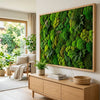
Why Everyone Is Talking About Living Moss Decor (And You Should Too)
, by Brian Tant, 8 min reading time
, by Brian Tant, 8 min reading time
Walking into a room with a massive moss wall feels like stepping into a protected corner of a Pacific Northwest forest. The air feels a little cooler. Sound seems to vanish into the velvet texture of the greenery. You might notice your heart rate slowing down just looking at the deep emerald patches. In 2026, people have moved past the era of high-maintenance fiddle leaf figs. We want the lush look of a jungle without the constant threat of a dying tree in the corner of the living room. Living moss decor has filled that gap perfectly.
Frond and Fang has seen a massive surge in moss interest over the last year. Our customers are looking for ways to bring nature indoors that feel permanent and tactile. Moss provides a sensory experience that standard houseplants cannot match. You can touch it. You can smell the damp earth it carries. It turns a sterile apartment into a living ecosystem.
Designers this year are obsessed with biophilic patterns. This means creating spaces that mimic the natural world to improve mental health. Moss fits this trend because it is naturally chaotic yet organized. It grows in hummocks and valleys. It creates a landscape on a miniature scale. Most people are using it to create focal points in rooms that lack natural light.
Traditional plants need a window. Moss thrives in the shadows. This makes it the ideal choice for windowless bathrooms or dim hallways. We see people building moss frames that look like living paintings. Some hobbyists are even covering entire coffee tables in glass-topped moss landscapes. The goal is to bring the "outside in" without the dirt and drainage issues of potted plants.
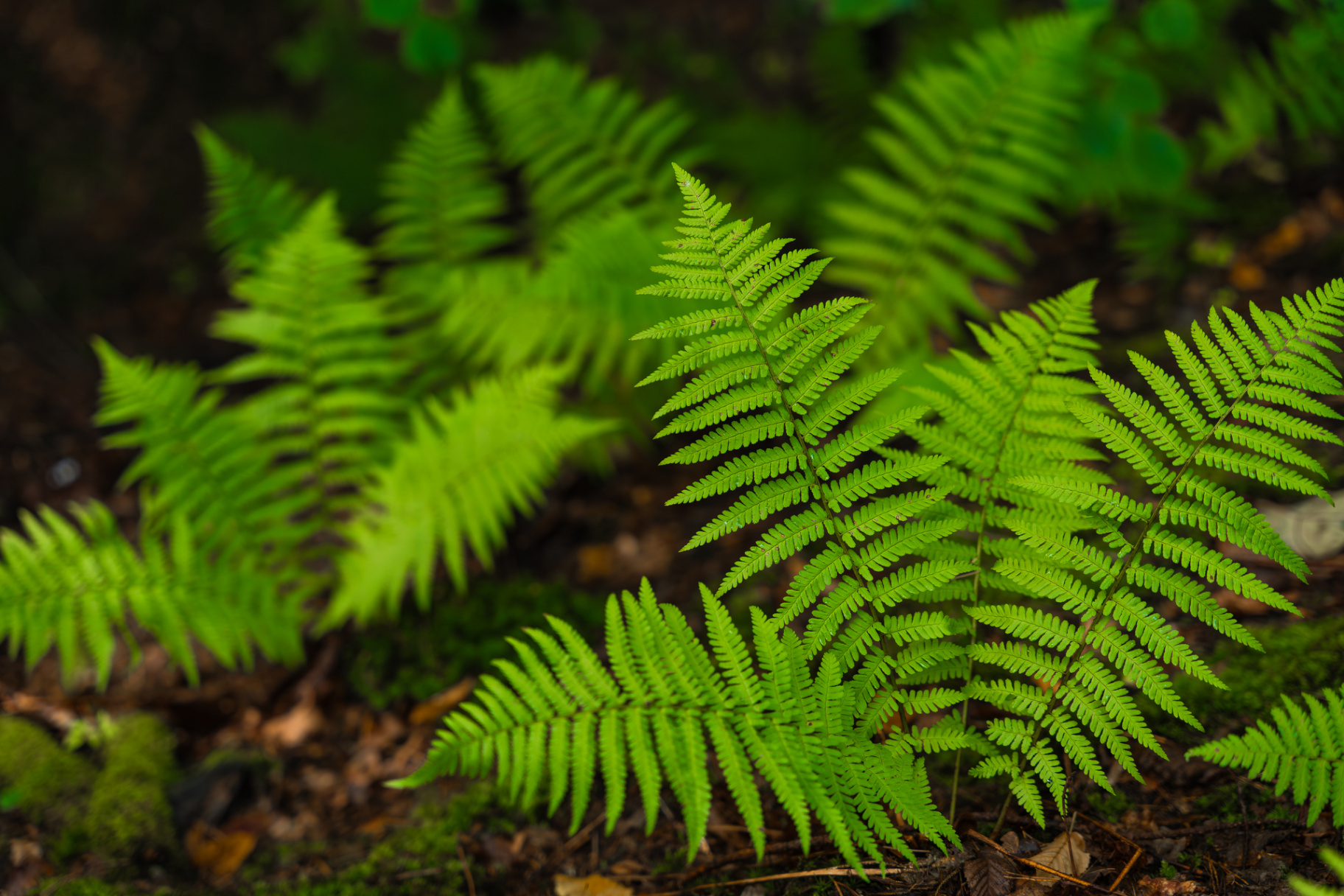
Moss is not a typical plant. It belongs to a group called bryophytes. These plants do not have true roots or seeds. They do not have flowers. They use tiny structures called rhizoids to anchor themselves to rocks or bark. They drink through their leaves. Every drop of water they need comes directly from the humidity in the air or a gentle misting.
This biology changes how you decorate with it. You aren't worried about soil depth or drainage holes. You are focused on the surface and the air. Frond and Fang specializes in varieties that adapt well to the home environment. We love species like the Blue Spikemoss. This plant features a metallic shimmer that looks almost alien under LED lights. It spreads quickly and creates a dense mat of blue-green foliage.
Another fan favorite is the Ruby Red Club Moss. The underside of the foliage is a deep crimson. It adds a layer of depth to a green wall that you just can't get from standard mosses. Using different species creates visual tension. It makes the display look more authentic and less like a store-bought rug.
Moss is tough in the wild. It survives freezing winters and scorching summers by going dormant. Inside your home, you want it to stay vibrant and soft. Success comes down to two main factors. Humidity is the first priority. Light is the second.
Most homes are too dry for moss. Air conditioning and heating systems strip moisture from the air. You need to create a microclimate. A glass terrarium is the easiest way to do this. The glass traps the moisture that the plants release. It creates a self-sustaining cycle of evaporation and condensation. If you are doing an open-air moss wall, you will need a high-quality mister. Spray the moss every morning. The leaves should feel damp but not soggy.
Light requirements are often misunderstood. People think "shade" means "darkness." Moss still needs light to photosynthesize. Direct sun will burn the delicate leaves in minutes. It turns the green to a crispy brown. Place your moss in a spot with bright, indirect light. A north-facing window works beautifully. If you have a basement setup, LED grow lights are a fantastic alternative. Moss responds very well to artificial light because the intensity is consistent.
You cannot use tap water for your moss. Most city water contains chlorine and minerals like calcium. These chemicals build up on the tiny leaves of the moss. Over time, a white crust forms. This prevents the moss from breathing and drinking. The plant eventually suffocates.
Use distilled water or rainwater. Collected melted snow also works well. These sources are pure and mimic what the moss gets in the forest. If you notice your moss looking dull, a heavy misting with distilled water often brings the color back within hours. It is one of the few plants that gives you such fast feedback.

The versatility of moss allows for creative placements. Kitchen backsplashes are becoming a popular spot for moss installations. The humidity from cooking and the sink helps the plants stay hydrated. You can tuck small clumps of moss around the base of other plants like the Birdsnest Fern. This creates a "finished" look for your pots. The moss also helps keep the soil moisture levels stable for the fern.
Bathrooms are the natural home for moss. The steam from your shower provides a daily boost of humidity. We have seen customers create "bath mats" made of living moss. The moss drinks the water from your feet when you step out of the tub. It feels incredible underfoot and looks like a spa retreat.
If a full wall feels like too much of a commitment, start with a tabletop forest. Use a large glass bowl or a geometric terrarium. Layer the bottom with small stones for drainage. Add a thin layer of charcoal to keep the water fresh. Top it with a specialized moss soil mix.
Place different textures together. Mix a flat, carpet-like moss with a mounding "cushion" moss. Add a small Lemon Button Fern for height. The contrast between the tiny moss leaves and the rounded fern fronds creates a sense of scale. It looks like a miniature mountain range.
Moss will tell you when it is unhappy. If it feels crunchy, the humidity is too low. You need to mist more often or close the lid on your container. If the moss looks slimy or smells like rotting eggs, it is too wet. Airflow is the solution. Leave the container open for a day to let the excess moisture evaporate.
Mold can sometimes appear in closed terrariums. This usually happens if there is decaying organic matter like a dead leaf. Simply remove the affected area. Increase the light slightly and reduce the watering frequency. Moss is incredibly resilient. Even if a patch looks brown, consistent care can often coax new green growth from the center.
Care note: This guide is for general plant care. Conditions vary by home and season. If you have pets or kids with sensitivities, use extra caution and place plants out of reach. Avoid chemicals or fertilizers unless you’re sure they’re carnivorous-plant or moss safe. Moss is sensitive to salts and chemical additives.
At Frond and Fang, we believe plants should be accessible. Not everyone has a backyard or a green thumb. Moss levels the playing field. It grows slowly. It doesn't require pruning. It provides a constant connection to the natural world.
The trend of 2026 isn't just about how things look on a screen. It is about how things feel in our homes. We are tired of hard surfaces and plastic. We want the softness of a forest floor under our roofs. Moss provides that luxury. It is a quiet, steady presence that asks for very little and gives back a sense of peace.
If you are ready to start your moss journey, check out our collection of ferns and mosses. We curate species that are hardy and beautiful. You can always reach out through our contact page if you need help designing your first living wall. The world is getting louder. Your home should be a place where the only thing you hear is the soft breathing of your plants.

Moss is a long-term investment in your well-being. A well-maintained moss installation can last for years. It will change over time. It might grow over the edges of its frame. It might develop new shades of green as the seasons shift. This evolution is part of the charm. You aren't just buying a piece of decor. You are inviting a living organism to share your space.
Stop by the store or browse our latest arrivals to see what is fresh this week. Whether you want a tiny jar of Cape Sundew surrounded by moss or a massive wall installation, we have the expertise to help you succeed. 2026 is the year of the green interior. Make sure your home is part of the movement.


