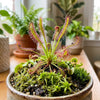
Sundews: The Glistening, Low-Maintenance Star of Your Indoor Bog
, by Brian Tant, 7 min reading time
, by Brian Tant, 7 min reading time
You might think keeping a carnivorous plant alive requires a secret parchment or a PhD in botany. Most people start their journey into the world of predatory plants with the Venus Flytrap because it is the famous one with the snapping traps and the jagged teeth. While we love a good flytrap at Frond and Fang, the sundew is actually the unsung hero for anyone looking to embrace their inner bog dweller without the heartbreak of a finicky plant. These glistening creatures look like something plucked from a prehistoric swamp or a deep space nebula. They are covered in tiny tentacles that sparkle with sticky drops of glue. They are surprisingly chill for plants that eat meat and they offer a visual payoff that few other houseplants can match.

Venus Flytraps often go into a scary looking dormancy where they look like they are dying or they simply refuse to snap shut if they do not get exactly the right amount of light. Sundews are different. Species like the Cape Sundew or the Spoon-leaf Sundew are much more forgiving for a beginner. They keep their leaves year round in most indoor settings and they do not need the same intense winter rest that flytraps demand. You get all the drama of a predator plant with about half the stress. It is the perfect entry point for someone who wants to try something more exotic than a pothos but feels intimidated by the more demanding species.
If you have ever dealt with fungus gnats or fruit flies in your kitchen then you already know the frustration of those tiny black specks buzzing around your fruit bowl or your coffee. Sundews are nature's most beautiful sticky traps. Those glistening drops of dew are actually a powerful adhesive combined with digestive enzymes. Once a gnat lands on a leaf it is game over for the bug. The plant slowly curls its leaf around the insect and begins its meal. You get a cleaner house and your plant gets a nitrogen snack. It is a win for everyone except the gnat. Seeing your plant actively helping you out in the house makes the relationship feel much more interactive.
Creating the right vibe for your sundew is half the fun. We like to lean into the "Bog Dweller" aesthetic. Think of moody, tactile environments with charcoal backgrounds and dark ceramic pots. A sundew sitting alone in a plastic nursery pot is fine, but a sundew nestled into a miniature indoor bog is a masterpiece. You can pair them with other moisture loving plants to create a primitive indoor garden. The contrast between the bright, sparkling dew of the sundew and the deep, velvet textures of something like Ruby Red Club Moss creates a visual depth that standard houseplants just cannot replicate.

The secret to success with these plants is not about ancient secrets or complex chemistry. It comes down to a few basic rules that anyone can follow. You need to think about the wild bog environment. In a natural bog the soil is almost entirely devoid of nutrients. This lack of food is exactly why these plants started eating bugs in the first place. You must use a soil mix that is totally clean of fertilizers. A mix of peat moss and perlite is the gold standard for sundews. If you use regular potting soil from a big box store you will likely kill your plant within a few weeks because the minerals and added fertilizers are too strong for its sensitive roots.
Water is the next big factor. You should never use tap water for a sundew. Tap water is full of minerals like chlorine and fluoride that build up in the soil and burn the plant over time. You need distilled water, rainwater, or water from a reverse osmosis system. The "tray method" is your best friend here. Find a shallow dish or tray and place your sundew pot inside it. Fill the tray with about an inch of distilled water so the soil stays wet all the time. Sundews do not like to dry out. They want to feel like they are sitting in a swamp in 2026. This constant moisture is what helps them produce that iconic glistening dew.
Light is the fuel that keeps the glistening engine running. These plants are light hungry. A sunny windowsill that gets several hours of direct sun is good, but a dedicated LED grow light is even better. If you see the dew starting to disappear or the leaves turning a pale green, it usually means the plant is asking for more light. When they are happy the drops will be huge and the tentacles will often turn a deep, vibrant ruby red. This color change is a great indicator of how your plant is feeling.

You might want to mix up the textures in your indoor garden to emphasize that primitive look. While sundews are the stars, they look incredible when contrasted with the soft fronds of a Blue Star Fern or the delicate leaves of a Lemon Button Fern. These plants enjoy similar humidity levels and create a lush, layered look that makes your bog feel like a slice of a lost world. The modern bog dweller knows that a variety of shapes and textures is what makes a collection stand out.
If you are looking for a specific variety to start with, the Cape Sundew Alba is a fantastic choice. It has a ghostly, ethereal look with white tentacles that still pack the same punch when it comes to catching gnats. It grows quickly and is very sturdy. Another great option is the Spoon-leaf Sundew which stays lower to the ground and forms a beautiful rosette shape that looks like a sparkling jewel sitting on the moss. Both of these are much easier to manage than a typical Venus Flytrap for a first timer.

Feeding your sundew is the most entertaining part of the process. If your plant is indoors and you do not have many bugs, you might feel the need to help it out. You do not need to go hunting for flies with a net. A tiny speck of crushed up fish flakes or a specialized carnivorous plant food applied directly to the leaves once a month is more than enough. You will get to watch the plant react over the next few hours as it curls its tentacles around the food. It is a slow motion show that never gets old. Just remember that the plant gets most of its energy from the sun. The bugs are just a multivitamin.
Anyone can be successful with these plants if they just respect the water and soil requirements. There is no need to be intimidated by the carnivorous label. These plants evolved to survive in tough conditions where other plants could not grow. They are resilient and adaptable. Once you see that first layer of glistening dew under the morning sun you will understand why so many people get hooked on the bog life. It is about creating a small, wild space in your home that works for you.
Care note: This is general guidance for carnivorous plant care. Use only insect-safe practices and avoid fertilizers or miracle additives unless they are specifically labeled safe for carnivorous plants. Standing water and high humidity can increase mold or algae so you should monitor and adjust your airflow as needed. If you have pets or kids, keep plants and any feeder insects out of reach.
Brian, make sure to check over these links and the formatting before we go live on Thursday. I have kept the tone casual and avoided those list formats we talked about. Let me know if you want to swap any of the featured ferns for different varieties from the beginner collection. I think the sundews are going to be a huge hit for the 2026 season.


