
Meet the Sundew: Beginner's Guide to Drosera Care and Fun Facts
, by Brian Tant, 8 min reading time
, by Brian Tant, 8 min reading time
Venus flytraps (VFTs) hog the carnivorous-plant spotlight, but sundews are where the real magic quietly sparkles. These glistening beauties might just be the most beginner-friendly carnivorous plants you’ll ever meet—and honestly? They’re way more forgiving than their snappy cousins.
Drosera (fancy nerdspeak) literally means “dewy” in Greek, and once you see those sparkling droplets coating every leaf, you’ll understand why. Think nature’s flypaper—only prettier, shinier, and far more polite about catching dinner.
Here’s the thing about sundews: they’re sneaky little hunters. While Venus flytraps put on a dramatic show with their snapping traps, sundews play the long game. They coat their leaves in what looks like morning dew but is actually a sticky, sweet-smelling glue that insects find absolutely irresistible.
Picture this: a tiny fly lands on what appears to be a harmless, sparkly leaf. Within seconds, it’s stuck fast. The more it struggles, the more it gets tangled up. The carnage ensues. Some sundew species even have leaves that slowly curl around their prey, like a gentle, fatal hug: less jump scare, more slow-motion burrito wrap. It’s beautiful and only slightly eerie, which is exactly why they’re so addictive to collect.
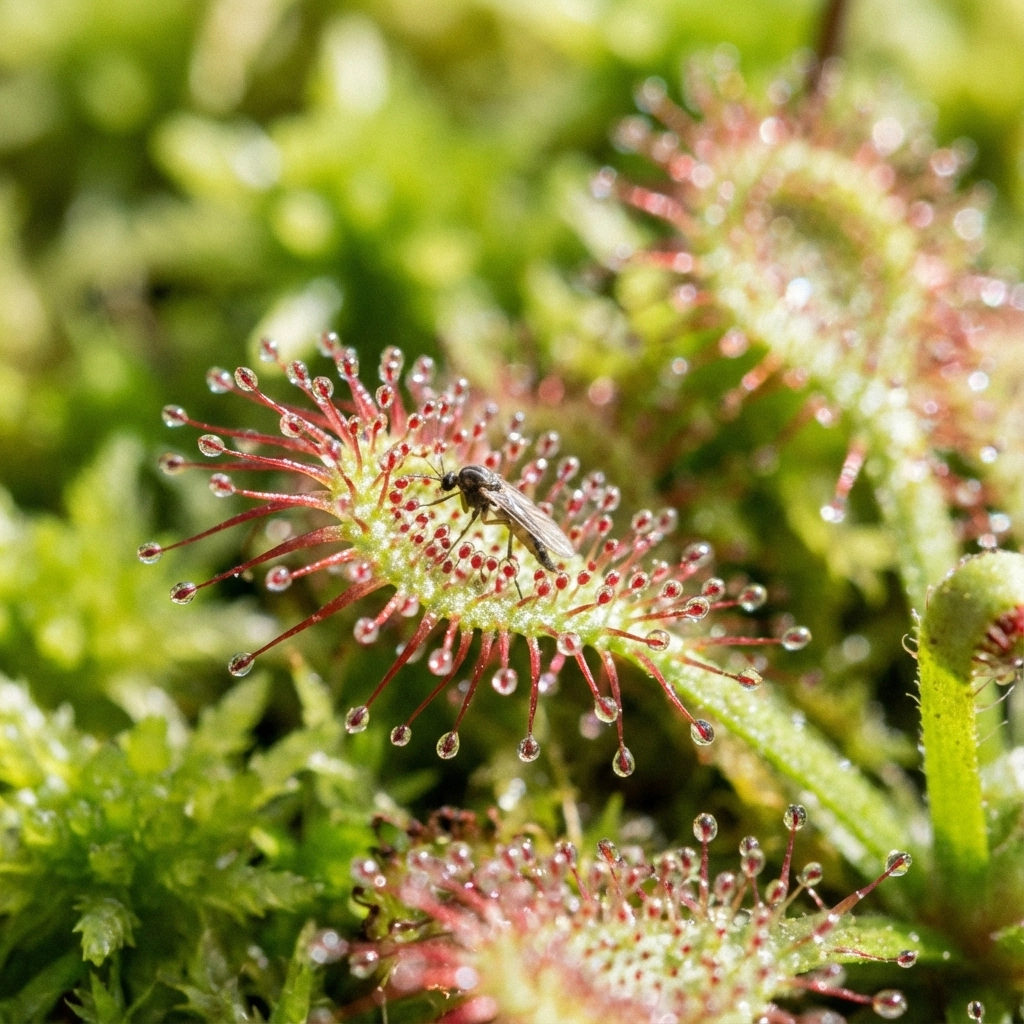
Let’s start with the most crucial element: light. Sundews are basically solar-powered sticky traps, and they need serious brightness to do their best work. Depending on the species, we’re talking at around six hours of direct sunlight daily—more sun, more sparkle. You can overdo it with some species, but they will tell you, usually by turning red - unless they're supposed to be red. In that case, um. Wow. Yeah. Aren't they pretty though?
Here’s your easy test: if your sundew stops producing those characteristic dewdrops (and the leaves are otherwise normal), it’s probably not getting enough light. Think of the dew as the plant’s hunting gear: no dew means no dinner, and no dinner means one sad sundew.
Indoors, a south-facing window works wonders. If you want consistent, show-off results, invest in a good LED grow light. Your plants will repay you with richer color, better dew production, and the kind of robust growth that makes other plant parents a little jealous.
This is where sundews flip the script on traditional houseplant care. Remember everything you know about “well-draining soil” and “let it dry between waterings”? Forget all of that. Most sundews want to be wet. Like, permanently wet. Like, OnlyFa.. um, nevermind. Moving on.
The tray method is your friend here: set your pot in a shallow dish of water and keep that dish topped up. During growing season, the soil should feel like a wrung-out sponge. Pro Tip: A slightly taller pot creates a moisture gradient, making it easier to fine tune the moisture level.
Water quality matters big time. Use distilled water, rainwater, or reverse osmosis water only. If your tap water tests under 50 PPM for dissolved minerals, you'll probably get away with it—but why sabotage yourself? Distilled water is like two dollars for a gallon. Sundews, like many carnivores, are sensitive to mineral buildup, and you don’t want to learn this the hard way. Also, even with low TDS water, the tray method will concentrate salts around the roots. Eventually this catches up. If you insist on raw dogging the water - TDS be damned, top watering will help. And re-pot more frequently.
Here’s where things get weird (in the best way). Most plants want rich, fertile soil packed with nutrients. Sundews? They’d rather starve, thank you very much. In nature, they evolved in nutrient-poor bogs and wetlands, developing their carnivorous habits specifically because the soil was so lacking.
A common recipe is a simple mix of well-rinsed peat moss and perlite. A 50/50 blend works well, though you'll find tons of arguments for and against substrate composition. The peat / perlite combo is tolerated by most carnivores and is a great starting point. Never, ever use regular potting soil, compost, or anything with added fertilizers. For carnivores that’s basically poison.
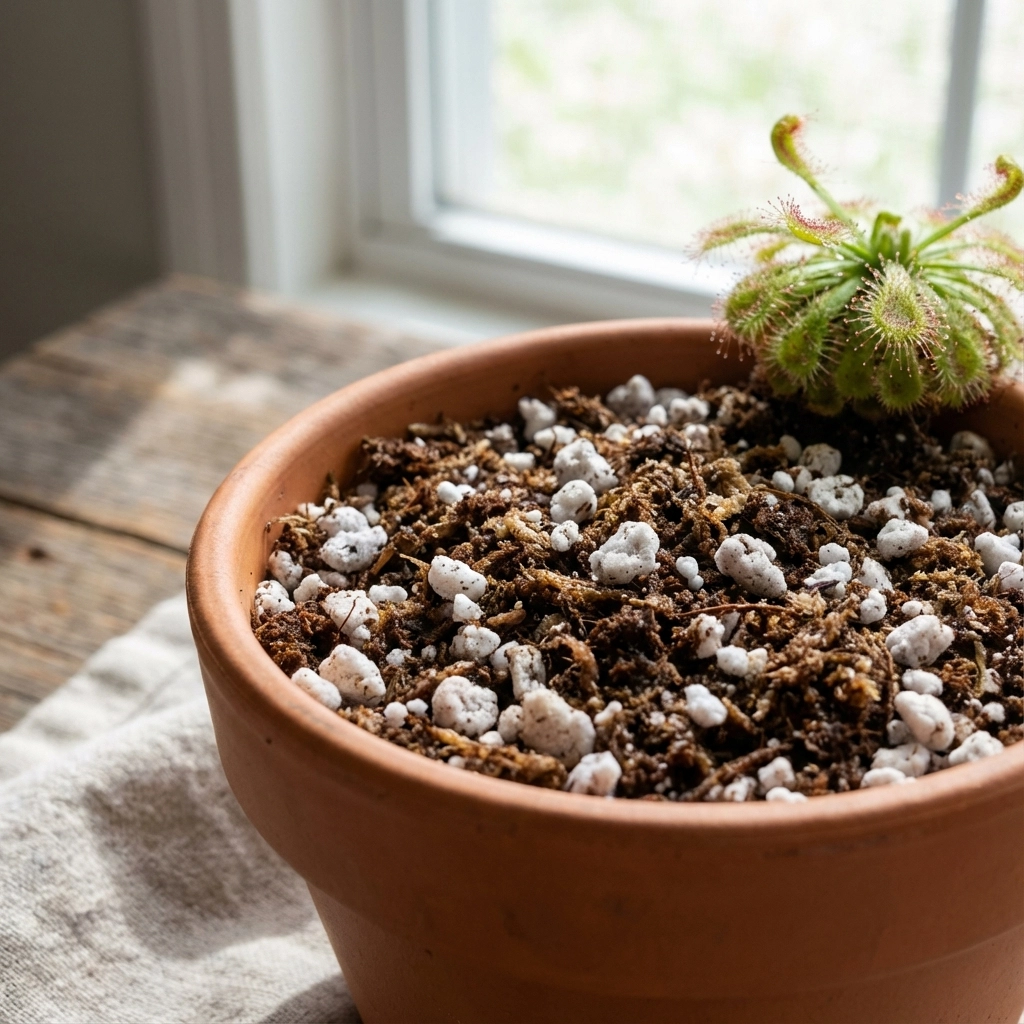
Good news: most beginner-friendly sundews are remarkably tolerant of normal household temperatures. Cape sundews (Drosera capensis) and other subtropical varieties thrive between 64–75°F—which probably describes your living room right now.
These subtropical species don’t need dormancy periods either, making them perfect for year-round indoor growing. They can handle brief temperature swings, too: a little cold snap likely won’t kill them, and they’ve been known to survive up to 100°F (they won’t thank you for it. They may even ugly cry, but they’ll usually recover).
If you’re thinking about temperate species (the cold-hardy ones), that’s a whole different ballgame involving dormancy and temperature cycling. Save those for after you’ve mastered the easy-going subtropical varieties and arguing on Reddit.
Here’s the beautiful thing about sundews: they’re incredibly good at their job. If you’ve got them in a bright spot near a window, they’ll likely catch enough insects on their own to stay happy and healthy. I’ve watched my Cape sundews snag everything from fruit flies to the occasional unfortunate ant.
That said, if you want to give them a boost (or you just enjoy playing plant chef), a monthly foliar spray with heavily diluted liquid fertilizer works wonders. We’re talking 1/4 teaspoon per gallon of water. That's it. Any stronger and you’ll burn the leaves. We use Maxsea at that strength and see good results (around 150 TDS in RO water). You'll also end up passing that gallon container of Maxsea down to your grandchildren, so plan accordingly.
Some growers swear by fish flakes or dried bloodworms, but honestly, watching them catch their own dinner is half the fun. There’s something deeply satisfying about seeing a previously struggling plant perk up once it starts nabbing its own meals.
Want to know a secret? Sundews are propagation powerhouses. They're freaks. Leaf cuttings are almost foolproof: take a healthy leaf, plop it on some damp sphagnum moss in a humid environment, and in a couple months you’ll have dozens of tiny plantlets.
Seeds work great too, and many sundews will self-pollinate if you let them flower. Just scatter the seeds on the surface of your growing medium (don’t bury them—think sprinkles, not scoops) and keep everything consistently moist. Before you know it, you’ll have more sundews than you know what to do with. Seriously.
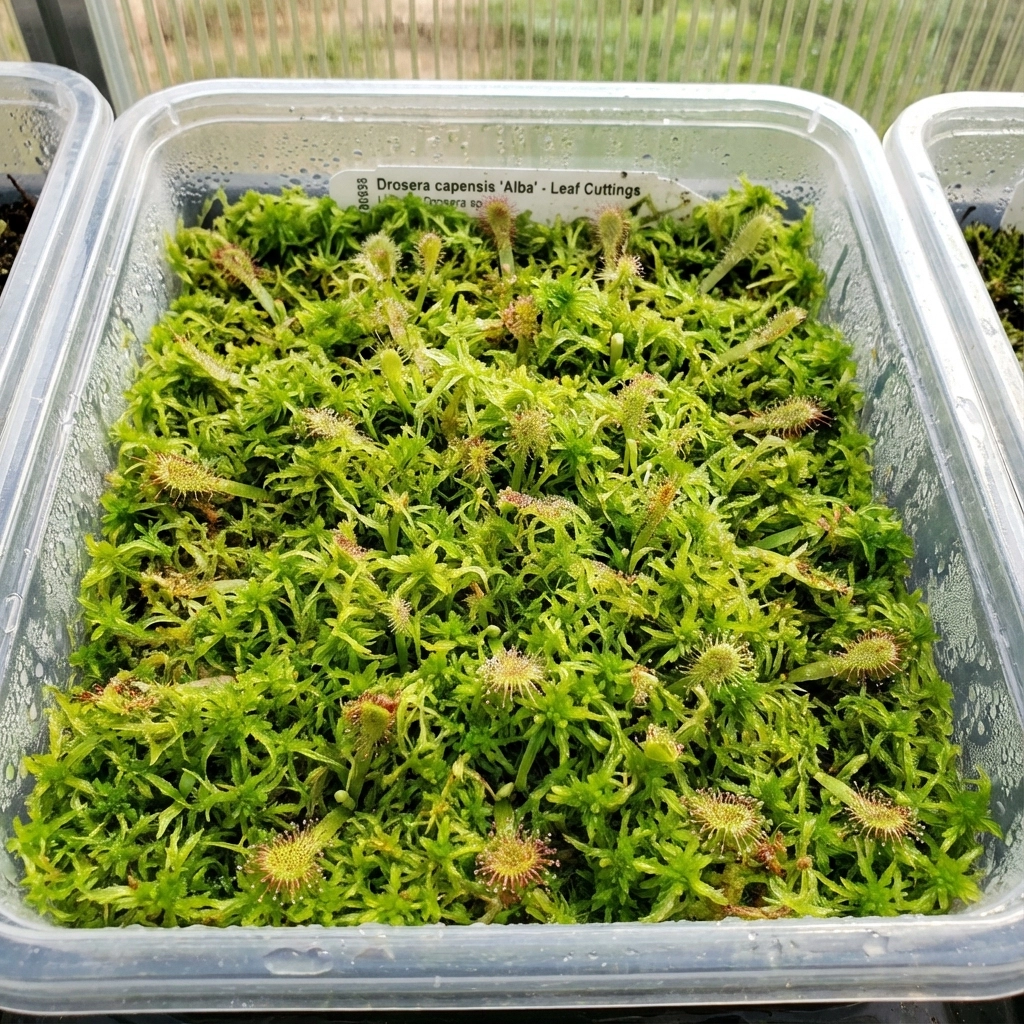
This is how sundew addictions start, by the way. You begin with one plant, propagate a few leaves “just to see if you can,” and "everyone is doing it," and "you can stop anytime you want." Suddenly you’re that person with seventeen different Drosera species taking over every sunny windowsill. You will develop a toxic relationship with Etsy.
Also, I don't know why that picture has the wrong plant label. Those aren't capensis, and definitely not 'Alba'.
If you’re new to the sundew game, start with subtropical species: they’re the most forgiving and don’t require dormancy periods. Cape sundews (D. capensis) are the ultimate beginner plant—tough, prolific, and absolutely gorgeous with their long, narrow leaves covered in ruby-red tentacles. And let's be straight, they're freaking gorgeous! I've been doing this 15 years and I still love them.
Our Spoon-leaf sundews are another fantastic choice, with adorable rounded leaves that look exactly like tiny green spoons dipped in morning dew. They stay compact, making them perfect for terrariums or small spaces.
Similarly, consider D. aliciae (Alice sundew): they form perfect rosettes of wedge-shaped leaves and produce a remarkable amount of dew. Seriously, they look like they’re permanently dusted in tiny diamonds.
Once you start growing sundews, you’ll understand where this disease comes from. There are over 190 species worldwide, each with its own leaf shape, growth pattern, and hunting style. Some form tight rosettes, others send up climbing stems several feet long. Some have leaves the size of dinner plates; others are barely bigger than coins.
The diversity is staggering, and unlike some carnivorous plants that demand fussy, ultra-specific conditions, many sundews are surprisingly adaptable. That makes them perfect for collectors who want variety without managing a dozen different care regimens.
Plus, they’re incredibly rewarding to watch. There’s something meditative about the slow, inevitable capture of prey, the gradual curl of leaves around an insect, and the patient process of digestion that follows. Are we weird? Does this make us weird?
Sundews might sound intimidating. They’re carnivorous plants, after all, but they’re honestly easier to care for than most houseplants once you understand their basics. Provide bright light, keep them consistently moist (with the right water), use nutrient-poor substrate, and maintain normal room temperatures. That’s it.
They’re self-feeding, easy to propagate, and absolutely fascinating to watch. Whether you’re dipping your toes into carnivorous plants or expanding an existing collection, sundews offer the perfect combo of exotic appeal and beginner-friendly care.
Ready to add some sticky-sweet hunters to your plant family? Your windowsill will never be the same (in the best possible way).


