Why Butterworts Will Change the Way You Think About Indoor Pests
, by Brian Tant, 10 min reading time
, by Brian Tant, 10 min reading time
If you’re here, you already know the vibe: you water your plants, you feel proud, and then: boom: tiny gnats start doing laps around your face like they pay rent. Fungus gnats are the indoor plant hobby’s most annoying side quest. You can yellow-sticky-trap your way into a modern art installation, you can drench with this-or-that, you can swear you’re “done buying plants” (sure), and still… they return.
Butterworts (Pinguicula, or “pings” if you want to sound like you know what you’re doing) flip that whole script. They’re not a spray. They’re not a trap you throw away. They’re a living, pretty, low-drama little predator that stays on the job.
And the part that really changes your brain? They look like soft, succulent-ish rosettes: sweet, innocent, Instagram-friendly: until you realize those shiny leaves are basically nature’s flypaper. Cute. Deadly. Helpful. A whole indoor pest plan in a 3-inch pot.
Most indoor “pest control” is reactive. You see gnats, you panic, you treat. But fungus gnats aren’t a one-and-done situation because they’re not really living on your countertops. They’re living in your potting mix.
Adult gnats are mostly a nuisance. The real issue is their larvae, which hang out in the top layer of damp soil and snack on fungi and decaying bits. If the mix stays consistently wet (or you’ve got a lot of organic, moisture-holding material), you’ve built them a tiny gnat resort with free breakfast.
So you kill adults, and more hatch. You dry things down, and they slow… until the next watering cycle brings the party back. It’s not that you’re doing something “wrong.” It’s that houseplants + moisture + organic mix = a system that gnats can exploit.
Butterworts don’t solve every underlying cause (they’re not going to rewrite your potting soil choices), but they do give you something most methods don’t: a continuous, living “front line” that reduces adult populations as they emerge. Less adult buzzing means fewer eggs laid. Fewer eggs means fewer larvae. The whole cycle gets less annoying, fast.
Butterwort leaves form a tidy rosette and often look like they’ve been polished. That shine isn’t just aesthetics: it’s sticky mucilage. Tiny insects land, get stuck, and the leaf slowly digests them.
It’s equal parts fascinating and satisfying, in a “nature is wild” kind of way.
Here’s why pings feel so different from other carnivorous plants indoors:
They don’t look “scary.” No snapping traps. No tubes of doom. They’re friendly-looking little rosettes that can blend right into a windowsill plant collection.
They’re passive and constant. You don’t have to time anything. You don’t have to trigger anything. The leaves just… keep working.
They’re genuinely decorative. Many species and hybrids bloom with surprisingly big, delicate flowers that look like tiny orchids or violets hovering above the rosette. So even when pests aren’t a problem, the plant still earns its spot.
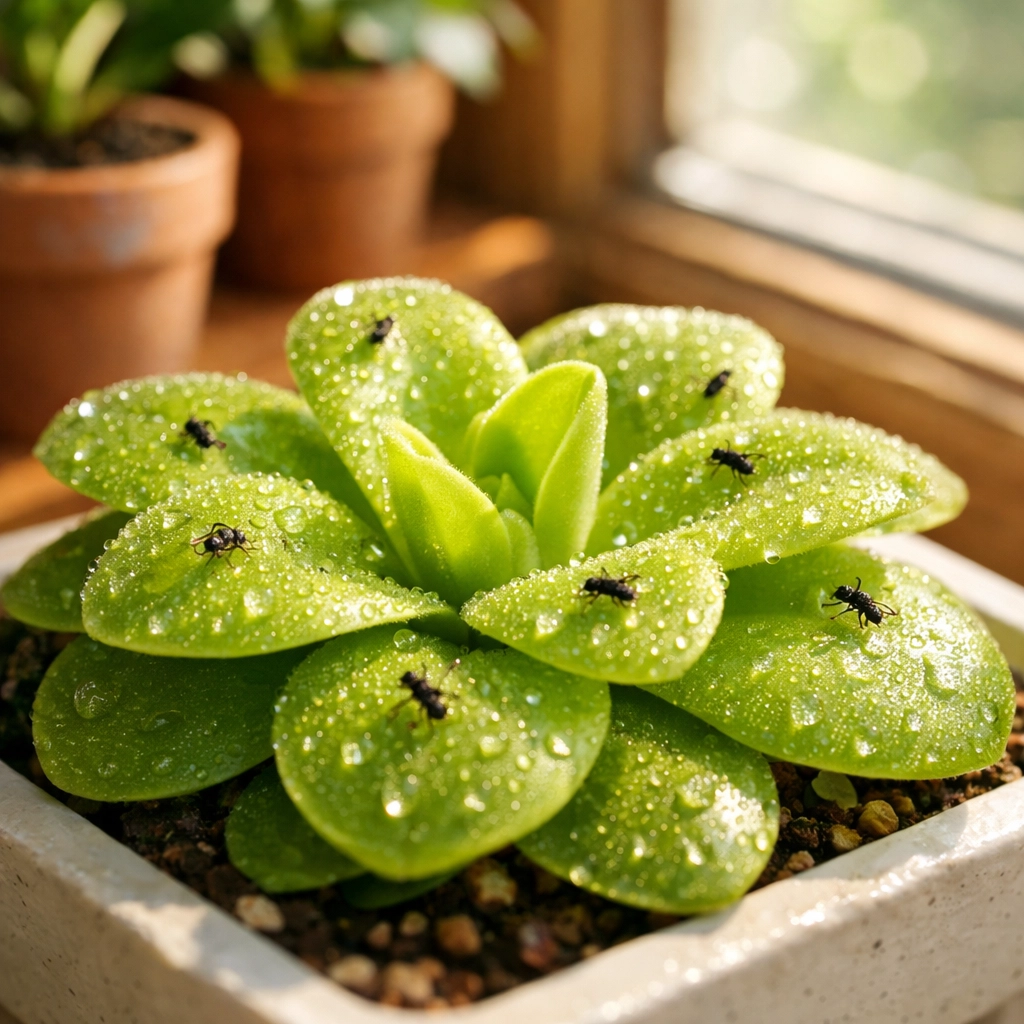
Butterworts specialize in small, lightweight insects that can’t muscle their way off sticky leaves. Which, conveniently, includes several of the indoor pests people complain about most.
Fungus gnats are the headline act. Adult gnats are small and clumsy flyers; they land on everything; they’re basically designed to get stuck.
Fruit flies can also end up on the menu, especially if you’re dealing with a kitchen-adjacent situation. (Still: do the classic fruit-fly cleanup routine too: don’t make your ping do all the work.)
Mosquitoes and other tiny flying insects can get caught as well, depending on your home and season.
A bonus you might notice: the sticky surface also grabs dust. Some folks frame that as “air purifying,” and while I’m not going to pretend a ping is a HEPA filter, it’s not nothing. If your leaves are catching dust, they’re pulling particulate out of the air in a very literal way. (Just don’t scrub the leaves: more on that soon.)
Indoor pesticide use is one of those things that sounds simple until you’re doing it in your living room next to your couch, your pets, and the plants you actually like. Many people don’t want to use chemical pesticides at all, and if you’ve got kids or curious animals around, that preference tends to get stronger.
Butterworts give you a pesticide-free option that’s always “on,” and it doesn’t involve turning your home into a temporary chemistry lab.
Also worth saying plainly: butterworts are widely considered pet-safe. They’re not going to poison your cat if your cat decides to investigate. (That said, “pet-safe” doesn’t mean “pet-proof.” If your pet chomps the plant into confetti, the plant will still have a bad day.)
There’s a psychological shift here too. Instead of fighting pests with escalating interventions, you’re adding one calm, functional organism to the ecosystem. It’s plantkeeping meets pest management, and it feels… oddly empowering?
Butterworts aren’t impossible. But they’re also not “treat it like a pothos” easy. Think of them like a tiny, high-performing specialist: easy-peasy when you give them the basics they require, grumpy when you ignore their non-negotiables.
The biggest non-negotiable is water quality.
Butterworts hate mineral-heavy water. Use rainwater, distilled water, or reverse osmosis (RO) water.
If you’re the type who likes numbers (hi, same), aim for very low total dissolved solids. Under 50 ppm TDS is a safe target, and plenty of growers keep it even lower. If your tap water is 150–400 ppm (common), it’s not a “maybe.” It’s a “don’t.”
Minerals build up in the soil and burn roots over time. It likely won’t kill the plant overnight, but it can slowly wreck it in a way that’s frustrating to diagnose.
Butterworts want bright light indoors. A sunny windowsill can work, and a grow light absolutely works. Aim for the kind of brightness you’d give a sun-loving houseplant without cooking it.
If the rosette is staying pale, stretching, or refusing to flower, give more light. If it’s getting crispy edges or bleaching, back off a little. You’re looking for “bright and happy,” not “toasted.”
Many common Pinguicula do well in typical indoor temperatures, roughly 65–80°F. They’re not usually as humidity-demanding as some other carnivorous plants. If your home is extremely dry, they’ll still survive, but they’ll look better with moderate humidity and stable conditions.
Avoid blasting them with HVAC airflow. The leaves are sticky and somewhat delicate; constant dry air can make them look tired.
Regular potting soil is a no-go. It’s too rich and holds too many minerals and nutrients for a carnivorous plant that evolved to live lean.
Butterworts generally want a low-nutrient, airy medium. Many growers use mixes based on peat and perlite, or long-fiber sphagnum with extra aeration. Some Pinguicula (especially Mexican types) are often grown in more mineral-heavy, rocky mixes: but still low in nutrients and still paired with pure water.
If you’re buying from a specialty plant store, the plant should arrive potted appropriately. Your job is mainly to resist the urge to “upgrade” it into a richer soil because you love it. (This is one of those rare moments where love looks like leaving it alone.)
A simple way to keep pings happy is to treat moisture like a wrung-out sponge. Moist, not swampy. Damp, not bone-dry.
Many people use a shallow water tray and let the plant sip from below, topping up as it dries. That can work beautifully, especially for Mexican Pinguicula that like consistent moisture during active growth. Some types appreciate a slightly drier rest period in winter. If you notice the plant making tighter, less-sticky leaves in the colder/darker months, that’s often your cue to reduce watering a bit and keep it just lightly moist.
The goal is to avoid extremes. Don’t let it dry to dust. Don’t keep it submerged. Gentle consistency wins.
Butterworts catch adults, so put them where adults hang out.
Set the pot near your gnat-prone plants, especially the ones that stay damp longer (big pots, moisture-retentive mixes, seed-starting trays, terrariums with venting issues). A bright windowsill adjacent to that cluster is ideal.
If the plant is thriving but you’re still seeing a swarm, you probably need two adjustments at once: add another ping (or two), and tweak your watering habits on the affected houseplants. Butterworts are helpers, not magic wands.
That said, when you place a ping near the source, you’ll often see the difference quickly: sticky leaves get peppered with tiny victims, and the “gnats in your coffee” vibe starts fading.
Don’t wipe the leaves. The sticky coating is the whole point. If you get dust buildup, you can gently rinse with pure water, but don’t rub. No leaf shine products, ever.
Don’t fertilize the soil. Carnivorous plants aren’t built for rich feeding at the roots. If you want to “feed” the plant, let it catch bugs. If you’re in a very bug-free home, it’ll still live: just slower growth. (This is a rare case where having a couple gnats is… technically useful.)
Don’t use mosquito dunks or systemic pesticides in the same pot. If you’re treating other houseplants for gnats, that’s fine, but keep the butterwort separate from chemical drenches and residues. Let it do its job clean.
Expect flowers, not fear. Pings bloom. A lot. And the flowers are honestly part of the charm. If yours doesn’t flower, it’s almost always a light issue.
Sticky traps are great for monitoring. They tell you whether the gnat population is trending up or down. They’re also… not cute.
Butterworts are a longer-term piece of the solution. They don’t just catch gnats for a week: they keep doing it for months and years, as long as you care for them correctly.
Using both at once is honestly a power move. Sticky traps help you measure progress. Butterworts help you maintain it without constantly buying replacements.
Most pest fixes feel like punishment. You’re reacting, you’re cleaning, you’re treating, you’re annoyed. Butterworts are the rare solution that feels like an upgrade.
You’re not just removing a problem: you’re adding a plant with personality. You get a succulent-looking rosette that shines under light, throws cute blooms, and quietly handles small flying pests like it’s part of its personal brand.
It also nudges you toward a healthier plantkeeping mindset: better water habits, better light awareness, more attention to moisture cycles. Even if you came for the gnat control, you end up learning something that improves your whole collection. That’s a pretty solid trade.
If you want to keep exploring carnivorous plants that don’t require a PhD in “why is this leaf mad,” our beginner-friendly guide is a good next read: https://frondandfang.com/blogs/news/are-carnivorous-plants-for-beginners-too-hard-5-easy-species-that-prove-you-wrong
And if you end up becoming a full-on carnivorous plant person… welcome. It happens fast.