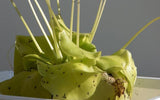
Why Your Butterwort Stops Catching Fungus Gnats in Winter
, by Brian Tant, 6 min reading time
Photo by Wouter Hagens via Wikimedia Commons (License: CC BY-SA 3.0). https://creativecommons.org/licenses/by-sa/3.0/. Changes: cropped.

Photo by Teresa Wang via Pexels (License: Pexels license). https://www.pexels.com/license/.
Your butterwort was quietly picking off fungus gnats, then winter arrived and the sticky leaves disappeared. The plant may look smaller, smoother, and much less interested in the tiny pests circling your other pots. That change can be surprising, especially if you expected your plant to keep working like a miniature flypaper strip all year.
For many Mexican butterworts, this seasonal shift is normal. Their winter leaves are built to conserve water, not catch insects. The plant hasn’t stopped working; it has changed its strategy for the season.
Butterworts, or Pinguicula, catch small insects with leaves covered in glands. Stalked glands release a sticky substance called mucilage. It looks like dew and acts a bit like flypaper: when a gnat lands on the leaf, it gets stuck.

Photo by Ruben Boekeloo via Pexels (License: Pexels license). https://www.pexels.com/license/.
Smaller, sessile glands on the leaf surface help digest prey and absorb nutrients. The trapped insect may also prompt the leaf to release more mucilage, making escape harder. Some butterworts slowly curl their leaf edges around larger prey. This is not a snap-trap like a Venus flytrap’s jaws. Think of it as a gradual adjustment that can help keep digestive fluid close to the meal.
Butterwort leaves may also give off a faint, musty or fungal-like scent. Researchers have proposed that this could resemble cues fungus gnats use to find fungi, but it’s not a proven lure for every species. The sticky leaf is the dependable part of the arrangement.
When a butterwort is making broad, sticky leaves, it can quietly patrol a windowsill for fungus gnats. That makes it an appealing alternative to a Venus flytrap if you want a plant that catches small flying insects without relying on a moving snap trap. It can help intercept gnats, though it won’t replace fixing the conditions that let them breed.
For an overview of general butterwort care and their insect-catching leaves, see “Butterworts (Pinguicula): The Unsung Heroes of Carnivorous Houseplants”.
Many Mexican butterworts grow two different kinds of leaves over the year. In brighter, warmer months, they make flatter, wider leaves with active sticky glands. As days shorten and light levels fall, many shift into a compact winter rosette of thicker, smaller leaves.
These succulent leaves store water, helping the plant get through a season that is often drier in its native habitat. They generally lack the active sticky surface of the summer leaves, so they don’t catch fungus gnats in any meaningful way. The gnat patrol has closed for the season.
This seasonal change is sometimes called a succulent phase. It’s more accurate than saying the plant has gone completely dormant: your butterwort is alive, but its growth and leaf function have changed. The timing varies with species and growing conditions, and not every butterwort follows the same seasonal pattern. Some keep carnivorous leaves year-round. For plants that do make a winter rosette, the International Carnivorous Plant Society’s guide to Mexican Pinguicula offers further species-specific background.
The leaves give you a useful clue. A tight rosette of small, thick, smooth leaves usually signals the succulent phase. Broad leaves that look shiny or beaded with mucilage suggest the plant is back in carnivorous growth.
When the winter rosette appears, reduce watering. The thicker leaves hold more water than the summer leaves, so the plant won’t need the same consistently moist conditions. Let the growing medium dry more between waterings, and don’t keep the pot sitting in water through the winter phase. A constantly wet mix can raise the risk of rot.
“Reduce watering” doesn’t mean leave the plant bone-dry for a long stretch. Check the medium and the plant rather than following a rigid calendar. When longer days and brighter spring light bring back broad, sticky leaves, gradually increase watering to match the plant’s renewed growth.
Keep giving the plant suitable light for its species, and avoid trying to force it into catching prey by changing its water or feeding it. The seasonal rosette is a normal adaptation, not a sign that the plant has failed.
While your butterwort’s winter leaves are non-sticky, tackle the conditions that help gnats multiply. Fungus gnat larvae develop in damp growing media, so let the top layer of soil dry between waterings when the plants growing in it can tolerate that. Bottom watering can help keep the surface drier; empty any excess water rather than leaving a tray full indefinitely.
Yellow sticky cards can catch adult gnats and help you see whether their numbers are dropping. Place them near affected plants, but keep them out of reach of children and pets. Sticky cards help monitor and catch adults; they don’t solve the larvae in the growing medium by themselves.
If you have a shelf full of carnivorous plants, remember that their water needs can differ. A butterwort in its succulent phase may need a drier winter routine than a plant that naturally grows in wet conditions. Check each plant’s needs rather than drying every pot on the windowsill.
Frond and Fang’s carnivorous plants collection is a place to browse other kinds of insect-catching plants. It’s a collection of carnivorous plants, not a butterwort listing.
As light returns, a butterwort that follows the seasonal cycle should start making broader leaves again. Those are the leaves that resume the sticky gnat-catching job. Give the plant time to transition; a few smooth leaves don’t mean it’s stuck in winter.
Late winter into early spring can also be a good time to propagate some Mexican butterworts from leaf pullings, as the plant prepares to resume active growth. The timing depends on the species, so check a species-specific propagation reference before taking leaves.
A winter butterwort isn’t broken, and it isn’t dead. It has traded its flypaper leaves for water-saving ones until the season changes. Keep its care in step with the leaves you see, and the sticky patrol can return when spring does.
Care note: This is general guidance for carnivorous plant care. Use only insect-safe practices and avoid fertilizers/“miracle” additives unless they’re specifically labeled safe for carnivorous plants. Standing water and high humidity can increase mold/algae, monitor and adjust as needed. If you have pets/kids, keep plants and any feeder insects out of reach.


