Nepenthes 101: Tropical Pitcher Plant Care, Quirks, and Collecting
, by Brian Tant, 5 min reading time
, by Brian Tant, 5 min reading time
If you're here, you already know that Nepenthes are absolutely mesmerizing—tiny jungle goblets with main-character energy. These tropical pitcher plants (aka monkey cups) look like they wandered out of a fantasy novel, complete with elaborate traps that make any carnivorous plant collector weak in the knees. Plot twist: despite the drama, Nepenthes are surprisingly manageable once you understand their needs.
Let's dive into the easy-peasy essentials to keep your pitchers plump—from core care to the quirky behaviors that make collecting them dangerously fun (in a delightful, plant-nerdy way).
Nepenthes are the showoffs of the carnivorous plant world. Instead of snapping shut like a VFT, they lure insects into ornate pitcher-shaped traps filled with digestive enzymes. Think of them as living cocktail shakers—mixing a bug-tini that turns into pure plant nutrition.
These plants fall into two main camps: highlanders and lowlanders. Highlanders come from cooler mountain regions and actually prefer a nightly temperature drop (very doable for most homes). Lowlanders want it warm and steamy 24/7—great if you’re running a greenhouse, less great if your humidity machine is… your bathroom.
The good news? Most Nepenthes you’ll find are either highlanders or hardy hybrids that can adapt to regular household conditions with just a few tweaks.
Nepenthes need about 12-14 hours of bright, indirect light daily. Notice I said indirect—they’re forest understory kids, not desert sunbathers. In the wild they get dappled light through canopies, not lizard-lamp intensity.
If you're growing them outdoors in a warm climate, 70% shade cloth is your bestie. Too much direct sun = crispy leaves and zero pitchers. Indoors, a bright east or west-facing window is great, or go with a grow light (just avoid the ones that double as space heaters).
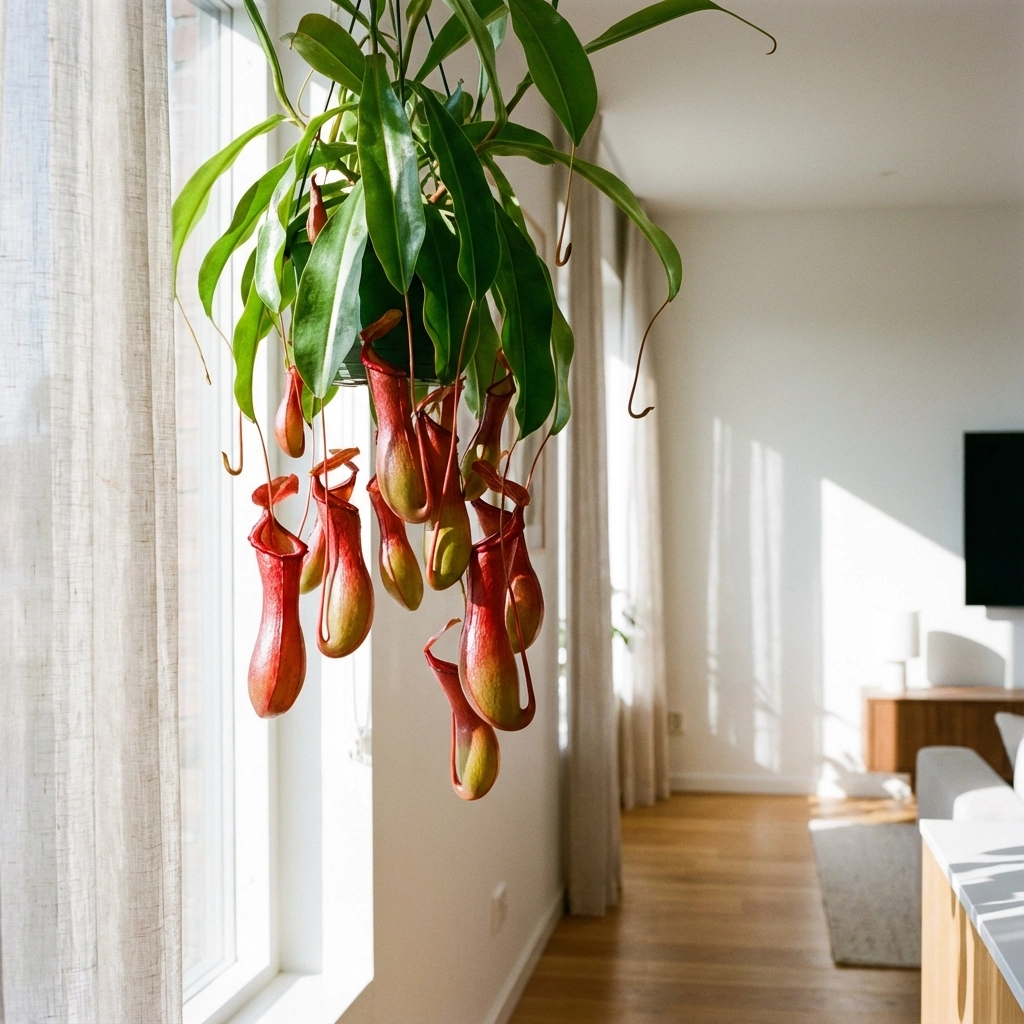
Highland species generally tolerate more light than lowlanders, but when in doubt, choose “bright shade” over “full blast.” Your pitchers will thank you.
Here’s where things get interesting. Highland Nepenthes actually need that day-to-night temperature difference: think 68-77°F (20-25°C) in the day and a cool-down to 50-59°F (10-15°C) at night. It’s not a preference—it’s their version of a good night’s sleep.
Lowland species prefer it consistently warm: around 86°F (30°C) by day and no lower than 68°F (20°C) at night. They’re the “beach resort, year-round” crowd.
Can’t hit it perfectly? Don’t panic. Many intermediate species and hybrids are flexible. But if you’re growing highlanders, that nightly drop is absolutely worth chasing (open a window, use a cooler room—easy wins).
Let’s be real: humidity is where most folks wrestle with Nepenthes. They like 70-80% ideally, though many will tolerate 50-60% if everything else is dialed in.
If your plant stops making pitchers—or they inflate, deflate, then ghost you—humidity is the likely culprit. You’ll know it’s right when pitchers stay plump and produce that telltale digestive liquid.
Daily misting helps, but keep it classy: you’re raising ambient humidity, not hosting a rainstorm. Pebble trays, plant crowding (hello, micro-jungle), and a small humidifier nearby all work wonders.
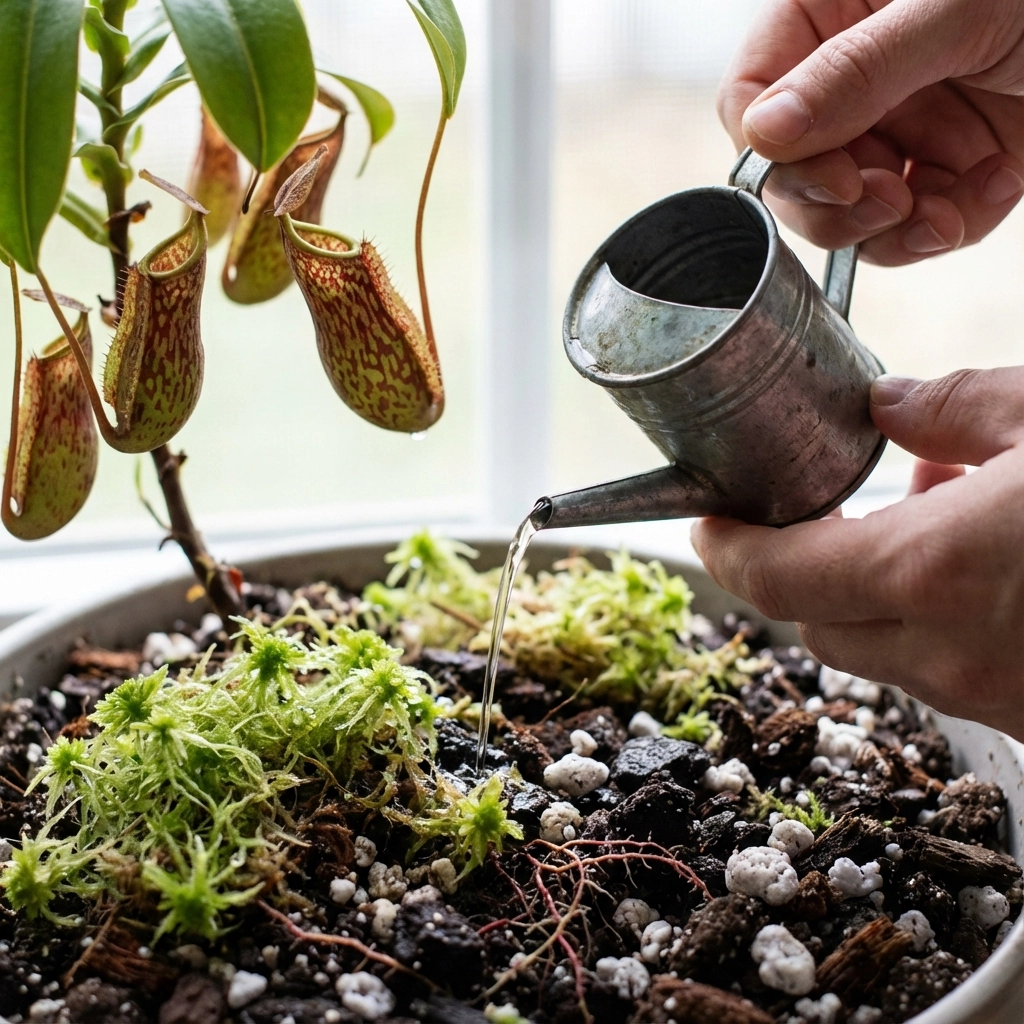
Watering Nepenthes is delightfully straightforward: keep the mix consistently damp (think wrung-out sponge), never soggy. Top-water so it drains freely, and don’t let the pot sit in a puddle—no swampy feet.
Water quality is non-negotiable. Use rainwater, distilled, or RO only. Tap, well, and most bottled water sneak in minerals that slowly sabotage these sensitive plants. No plot twists here—pure water or bust.
For soil, stick with a simple 1:1 sphagnum moss and perlite mix. Moisture retention + airflow = happy roots. Keep it fertilizer-free; Nepenthes get their nutrients from prey, not potting mix extras.
Here’s where Nepenthes break the rules: they don’t need regular feeding. In fact, overfeeding is one of the fastest ways to make them sulk (or worse).
If you want to treat them occasionally, dried crickets are perfect, as are live or dead flies. You can also use cricket powder or a pinch of fish food every couple of weeks if you’re feeling fancy.
Fertilizer is the spicy topic. They’re extremely sensitive to nutrients, so only try very dilute foliar feeding (spray the leaves, never the soil). Many growers use orchid fertilizer at ~10% strength, or a carnivorous plant fertilizer at 60-80 PPM.
Honestly? If you’re starting out, skip fertilizer entirely. Nail the environment first—light, humidity, temperature, and pure water. Once those are steady, then experiment with light feeding.
New plants often arrive with sad, deflated pitchers that have lost their digestive fluid. Totally normal. Think “jet lag.” Give them a few weeks to acclimate and focus on roots, and pitcher production will follow.
They also show their best colors under ideal light. That rich red you see in photos? Usually a sign of good exposure (but too much direct sun will scorch—balance is the name of the game).
One more quirk: if leaves suddenly get huge but pitchers stall, you’ve likely overfed. Ease up and let the plant reset; pitchers usually return once nutrient levels calm down.
Start with intermediate species or hybrids that handle household conditions without drama. Pure highland or lowland species can be divas—save them for when you’ve got a few wins under your belt.
Plenty of growers succeed on bright windowsills, and young plants thrive in terrariums with T5 grow lights. The real unlock is mastering the environment first and everything else second.
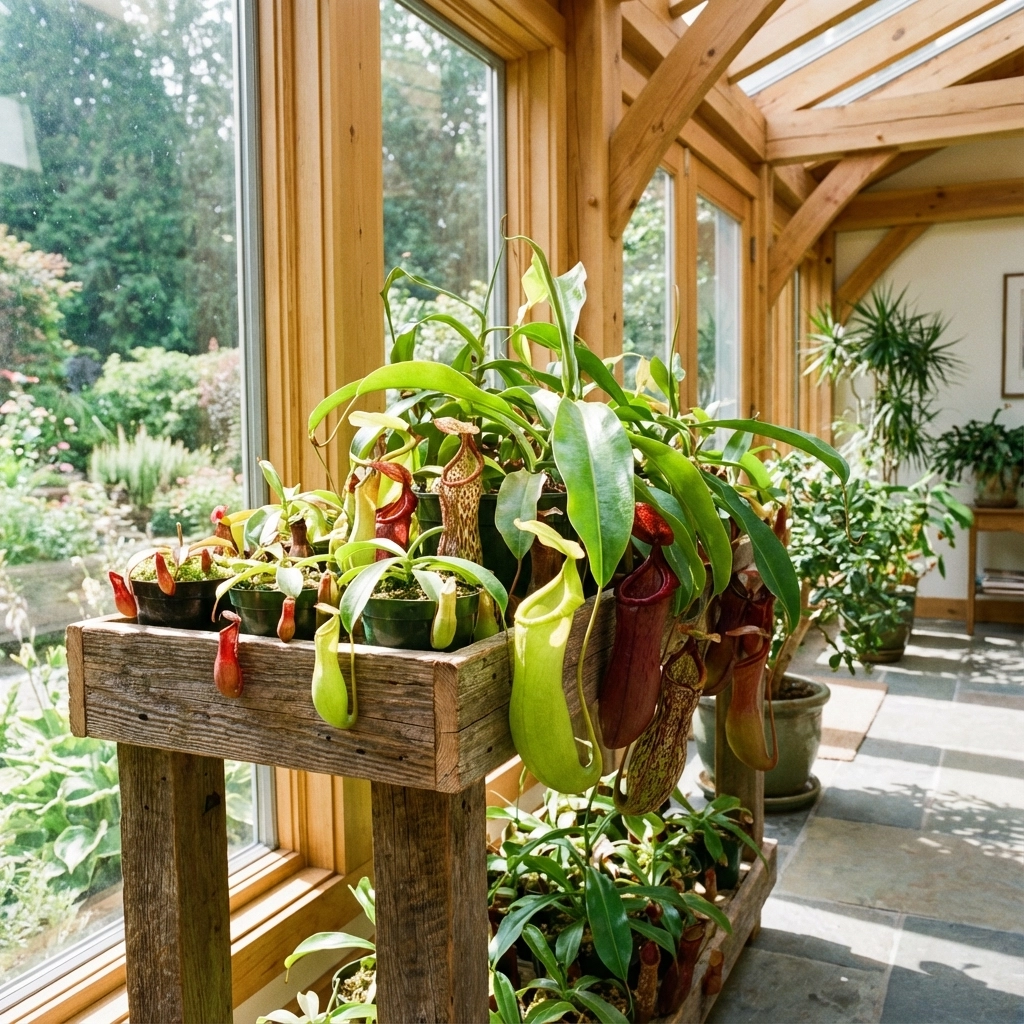
Focus 90% of your energy on lighting, humidity, temperature, and water quality. Once those are dialed and your plants are clearly happy, then play with feeding and ultra-light fertilization.
Nepenthes might look intimidating, but they’re surprisingly forgiving once you meet their few non-negotiables. The learning curve isn’t as steep as it looks—start with the right species, keep the basics steady, and you’re golden.
Remember: consistent care beats perfect care every time. Aim for steady, good-enough conditions rather than chasing perfection. These plants have been adapting for millions of years—they’re tougher than they look.
Ready to dive into the world of tropical pitcher plants? Check out our carnivorous plant collection and remember: we’re always here to help troubleshoot if your pitchers get pouty.


