
Nature's Hanging Pitfalls: A Beginner's Guide to Growing Pitcher Plants (Nepenthes) Indoors
, by Brian Tant, 10 min reading time
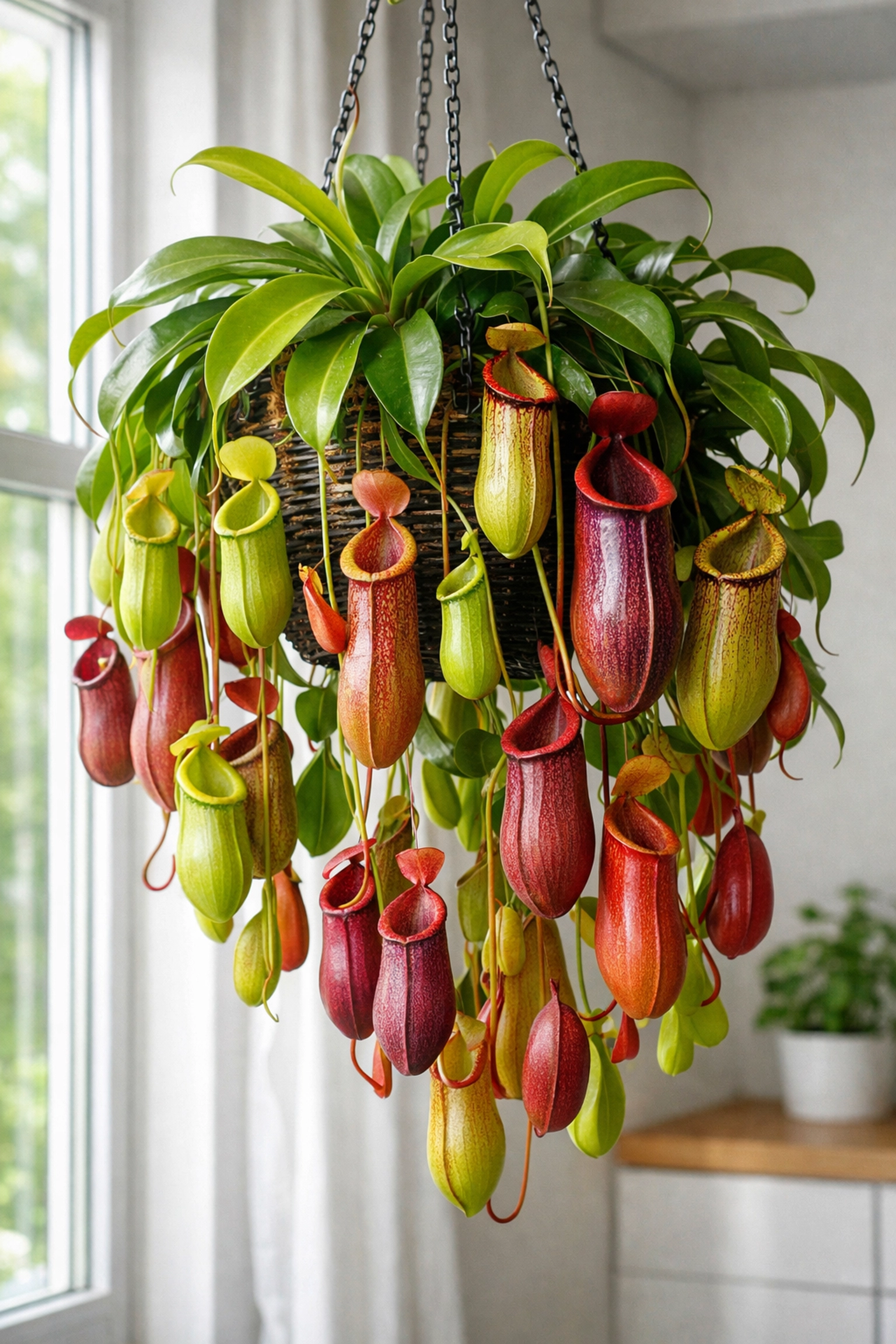
, by Brian Tant, 10 min reading time
If you've been eyeing carnivorous plants but find yourself a little tired of the Venus flytrap hype, let me introduce you to their way cooler (and honestly easier) cousin: Nepenthes, better known as tropical pitcher plants. These beauties are the hanging basket showstoppers of the carnivorous plant world, and they're about to completely change how you think about growing meat-eating greenery indoors.
Unlike their snap-trap relatives that sit close to the ground waiting to chomp, Nepenthes take a more elegant approach. They dangle their elaborate pitcher traps from vining stems, creating this absolutely stunning cascading effect that looks like something straight out of a science fiction movie. Seriously, if plants could win beauty pageants, these would take home the crown every single time.
Here's where things get wild. Instead of mechanical snapping jaws, Nepenthes evolved what botanists call a "pitfall trap," and it's devastatingly clever. Each pitcher is essentially a modified leaf that forms a deep, liquid-filled chamber. The rim of the pitcher is slippery and often produces sweet nectar that lures unsuspecting insects. Once a bug lands on that slick surface, it's game over, they slip right down into the digestive fluid below.
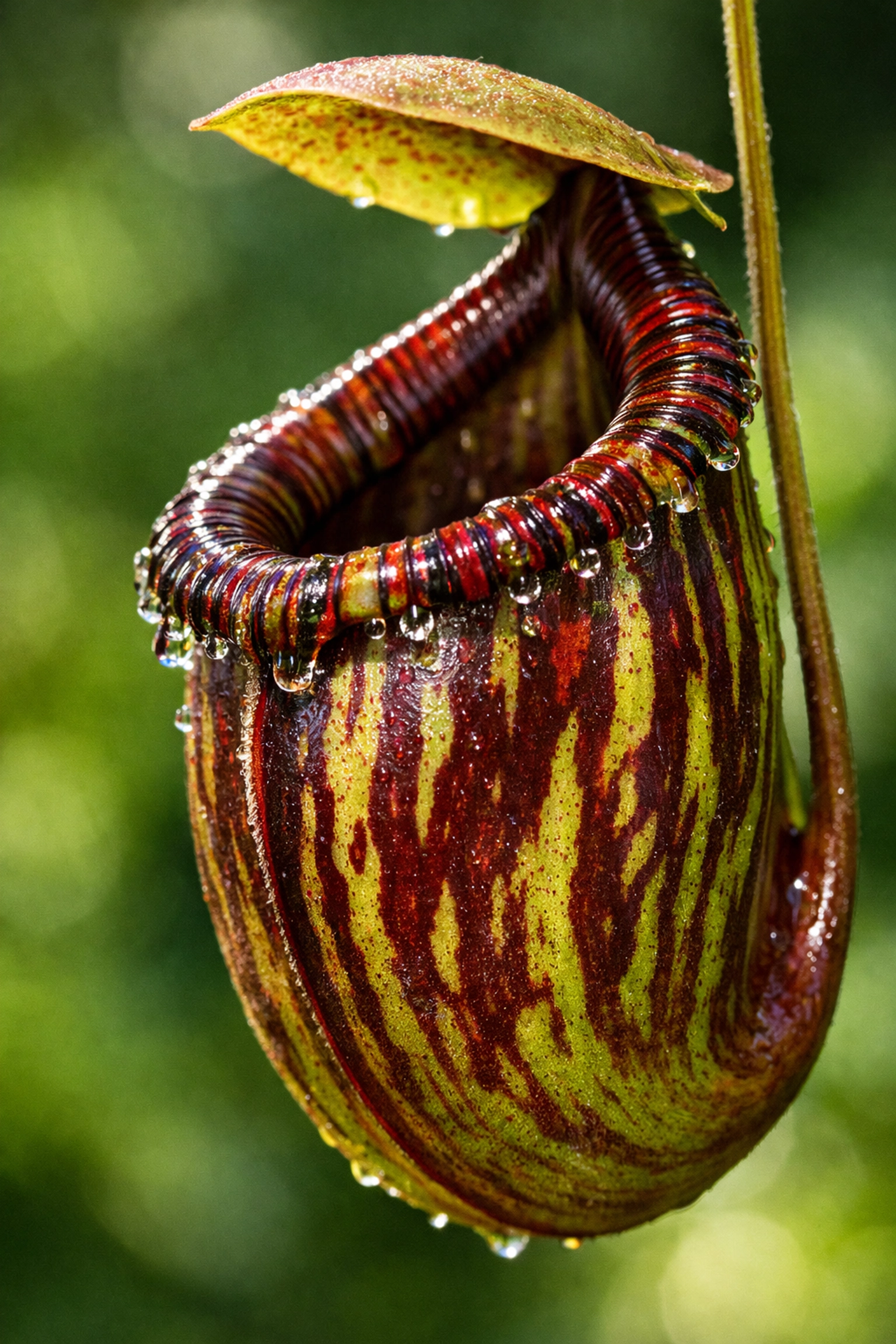
The pitchers themselves look like they were designed by an artist who got a little too creative with their coffee break. Some are striped like candy canes, others are deep burgundy or speckled with crimson spots. Many have these ridged "wings" running down their sides and elaborated lids that act like tiny umbrellas, keeping rainwater from diluting the digestive juices inside. It's functional art, really, and watching them develop on your plant is genuinely addicting.
What makes them feel so alien is how they just hang there, swaying gently, these bizarre vessels dangling from otherwise normal-looking leaves. Each pitcher can last for months before eventually browning and drying up, but don't worry, your plant will keep producing new ones as it grows. The whole setup is peak tropical jungle vibes meets carnivorous hunger, and it absolutely slaps in a hanging planter near a bright window.
Here's the thing that surprises most people: tropical pitcher plants are actually more beginner-friendly than Venus flytraps for indoor growing. While flytraps demand that cold winter dormancy period (which is a whole ordeal when you're trying to recreate bog conditions in your living room), Nepenthes are perfectly happy at normal room temperature year-round. No seasonal gymnastics required.
They're tropical plants, which means they evolved in warm, humid environments without dramatic temperature swings. Your home? Probably warmer and more stable than their natural habitat experiences at night. This makes them shockingly adaptable to indoor life, especially if you can give them what they really crave: bright light and decent humidity.
The hanging basket situation isn't just aesthetic, it's practical. Nepenthes are natural climbers and viners, scrambling up trees in their native Southeast Asian rainforests. When you grow them in hanging baskets or tall pots, you're letting them do their natural thing. Plus, displaying them this way means you get to appreciate those incredible pitchers at eye level instead of craning your neck to see what's happening down at soil level.
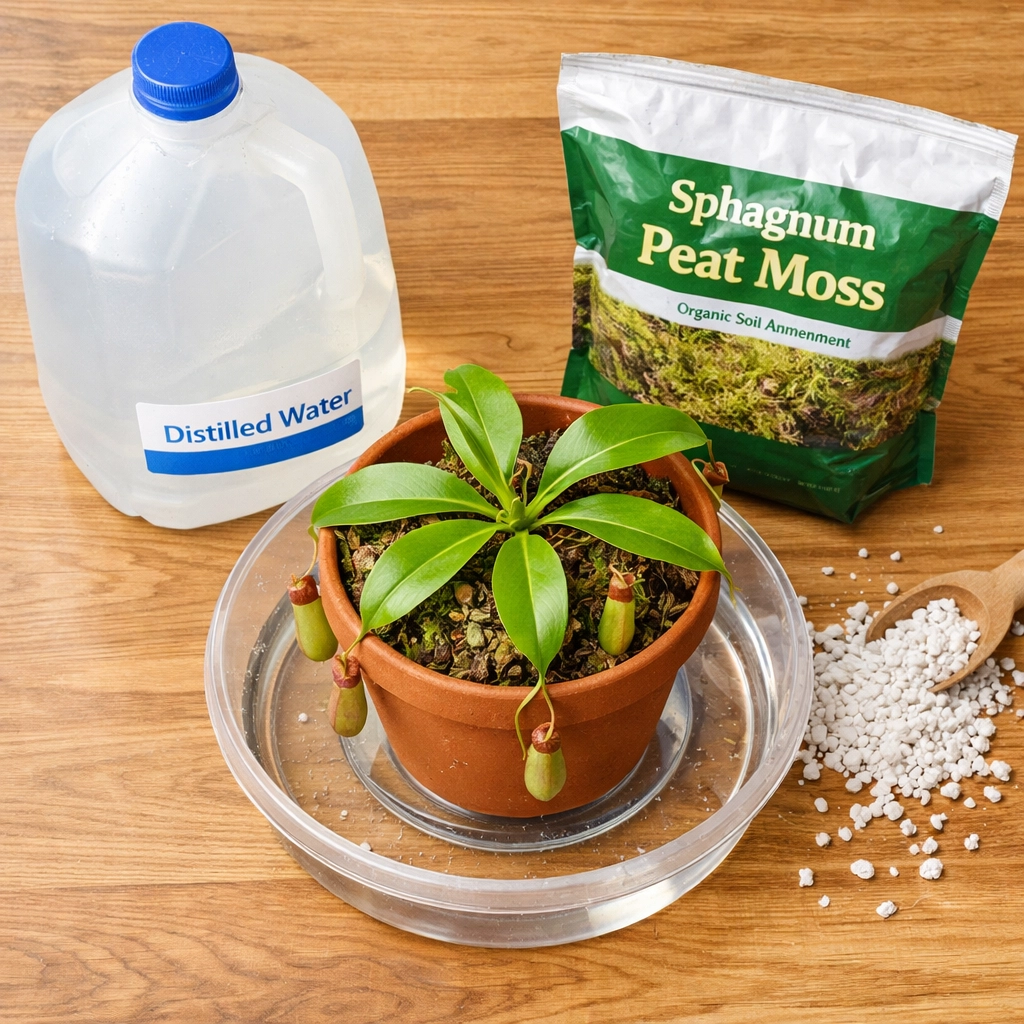
Let's talk about the one non-negotiable rule for how to grow pitcher plants indoors successfully: water quality matters more than almost anything else. Tap water is basically poison to these plants because of dissolved minerals like calcium and chlorine. You need distilled water, rainwater, or reverse osmosis water, period. No shortcuts here. The good news is that distilled water is cheap and available at pretty much every grocery store, so it's not like you're being asked to collect morning dew from endangered orchids or anything.
Keep your Nepenthes consistently moist during the growing season (which for indoor plants is basically always). Think "wrung out sponge" rather than "sitting in a swamp." A good method is using a drainage tray underneath your hanging basket and keeping about an inch of that mineral-free water in the tray. The roots will wick up what they need, and you can easily monitor moisture levels. Refill the tray rather than watering from above, it's easier and reduces the risk of disturbing your plant.
The soil mix matters too, but thankfully it's simple: carnivorous plants need a soilless mix because they evolved in nutrient-poor environments. A blend of about 60% sphagnum peat moss and 40% perlite or horticultural sand works perfectly. You can also buy pre-made carnivorous plant soil if you don't want to play mad scientist with substrate ratios. Just make sure whatever pot you use has excellent drainage holes.
When it comes to light, more is more. Nepenthes want as much bright light as you can possibly give them indoors. A south-facing or west-facing windowsill with several hours of direct sunlight is ideal. If your pitchers are coming out small or the plant seems leggy and stretched, that's usually your plant screaming for more light. Adequate light is crucial not just for general health but specifically for pitcher development, those traps need energy to form.
Now, humidity. This is where people get nervous, but honestly, it's not as scary as it sounds. Yes, Nepenthes appreciate high humidity (they're from tropical rainforests, after all), but many beginner varieties adapt surprisingly well to average household humidity levels around 50-60%. If you want to give them a boost, try these easy-peasy tricks: group them with other plants to create a micro-humid environment, set them on a pebble tray filled with water (just don't let the pot sit directly in the water), or mist them occasionally.
If you're really serious about creating ideal conditions, growing Nepenthes in a terrarium is absolutely an option, especially for smaller specimens. Some are even sold in those cute Bio-Domes specifically designed for indoor carnivorous plant growing. The enclosed environment maintains higher humidity naturally, and watching pitchers develop inside a glass case is borderline hypnotic.
Temperature-wise, room temperature is perfect. Most beginner Nepenthes varieties thrive between 65-80°F, which is probably exactly where you keep your home anyway. No cold dormancy, no temperature drops, no complicated seasonal adjustments. Just steady, comfortable warmth like they'd experience in their native highlands and lowlands.
Here's something that blows people's minds: you don't actually need to feed your Nepenthes live insects. Unlike Venus flytraps that benefit from active feeding, pitcher plants are pretty self-sufficient. If you're growing them indoors near a window, they'll catch the occasional gnat or fruit fly on their own. The pitchers are incredibly efficient at their job once they're open and producing that tempting nectar.
That said, if you want to give your plant a boost (or you just enjoy the slightly morbid satisfaction of feeding carnivorous plants), you can absolutely drop dead insects into the pitchers. Dried mealworms, freeze-dried bloodworms, or even the occasional bug you find around the house works fine. Some growers also add diluted liquid orchid fertilizer directly into a few pitchers: just a drop or two does the trick.
The key thing to understand is that Nepenthes evolved to catch their own prey, so as long as your plant is healthy and producing pitchers, it's getting what it needs. You're not required to play bug delivery service unless you want to. Think of supplemental feeding as optional enrichment rather than essential maintenance.
The number one killer of indoor Nepenthes is inconsistent watering leading to root rot. These plants want consistent moisture, not alternating cycles of bone-dry and waterlogged. Get into a rhythm of checking your drainage tray and refilling it before it fully empties. Root rot happens when roots sit in stagnant water for too long or when the growing medium breaks down and becomes too dense, so repotting every couple of years with fresh carnivorous plant soil helps prevent this.
Another mistake is trying to give them regular houseplant care. Remember: no tap water, no regular potting soil, no fertilizer in the soil. These plants are specialists, and they need their specific conditions respected. It might feel counterintuitive to use "poor" soil and mineral-free water, but that's literally what keeps them healthy. Their root systems evolved to absorb nutrients from trapped prey, not from the ground.
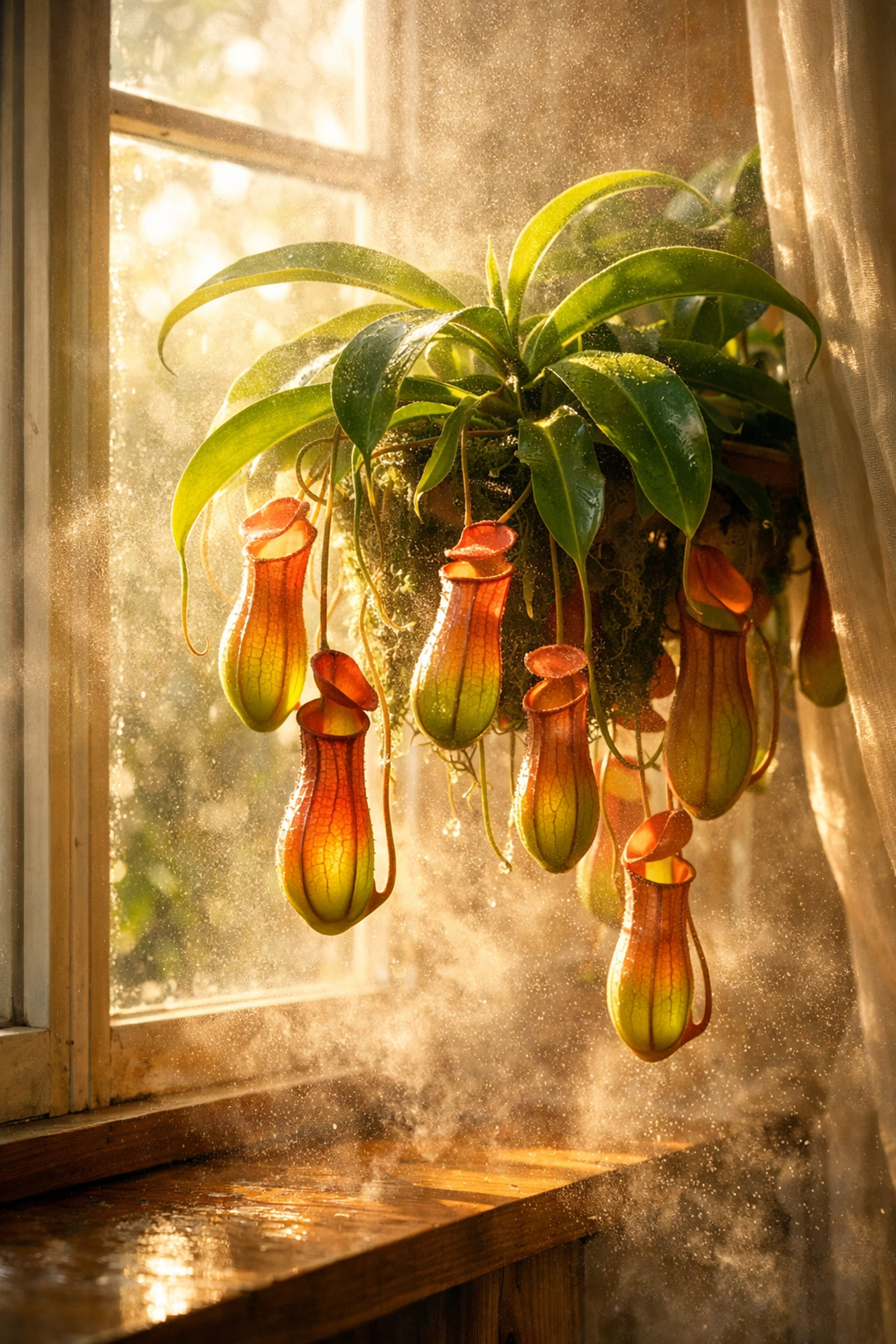
Don't freak out if older pitchers die off: this is completely normal. As new growth emerges from the top of the plant, older pitchers at the bottom will naturally brown and dry up. Just trim them off when they're crispy. Your plant is constantly cycling through pitcher production, and seeing fresh pitchers unfurl from new leaves is part of the joy of growing these beauties.
If you're ready to dive into the world of tropical pitcher plants (and honestly, after reading this, how could you not be?), focus on beginner-friendly varieties. Species like Nepenthes ventricosa, Nepenthes alata, and various hybrids bred specifically for ease of care are perfect starting points. These varieties are forgiving, adapt well to typical home conditions, and produce gorgeous pitchers that'll make you feel like you're successfully growing something truly exotic.
Start with one plant, get comfortable with the care routine, and then watch as you inevitably become That Person who can't stop collecting different Nepenthes varieties. It happens to the best of us. The good news is that once you dial in the basic care: mineral-free water, bright light, decent humidity: you can apply those same principles to pretty much any Nepenthes you bring home.
Growing pitcher plants indoors isn't just about having a cool carnivorous plant on display (though that's definitely a perk). It's about creating a little slice of tropical rainforest in your space and watching these alien-looking traps develop right before your eyes. Whether you're looking for an alternative to the standard Venus flytrap or you just want a plant that's genuinely conversation-starting, Nepenthes deliver on every level. Give them what they need, and they'll reward you with vigorous growth and those stunning hanging pitchers that never stop being fascinating.
Still curious about diving into carnivorous plants but not sure where to start? Check out our collection of carnivorous plants or explore our beginner-friendly options to find your perfect match. Trust me, once you start growing these beauties, you'll wonder why you waited so long.


