
Indoor Moss Care 101: A Beginner's Guide to Mastering the 2025 Plant Trend
, by Brian Tant, 7 min reading time
, by Brian Tant, 7 min reading time
If you're here reading this, you've probably noticed that moss has become the hottest indoor plant trend of 2025. And honestly? It's about time. While everyone was obsessing over fiddle leaf figs and monsteras, moss has been quietly waiting in the wings, ready to prove that sometimes the most ancient plants make the best houseplants.
Here's the thing about moss – it's been around for over 450 million years, which means it's pretty darn good at surviving. But that doesn't mean you should just stick it in a corner and forget about it. Like any relationship, a little attention goes a long way.
Let's start with the good news: moss is incredibly forgiving. Unlike your drama queen orchid or that temperamental calathea that throws a fit every time you look at it wrong, moss just wants a few basic needs met. No fancy fertilizers, no weekly repotting sessions, no complicated watering schedules that require a PhD in plant psychology.
The best part? Moss creates these amazing miniature landscapes that make you feel like you're peering into a fairy tale forest. Whether you're building your first terrarium or just want something green that won't judge your plant-parenting skills, moss has got your back.
Think of moss care like a simple recipe with four main ingredients: humidity, light, temperature, and the right growing medium. Get these basics right, and your moss will reward you with lush, vibrant growth that looks like something straight out of a nature documentary.
The Growing Medium Mystery Solved
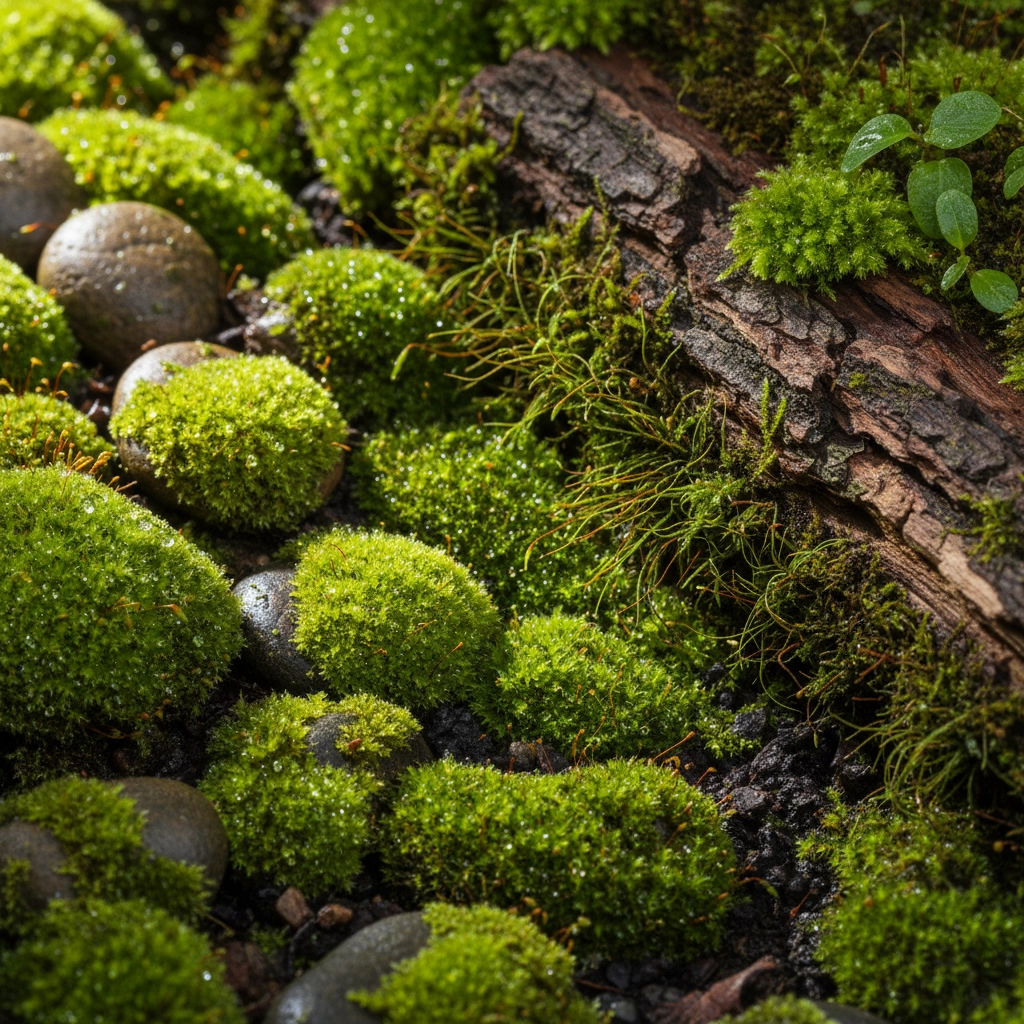
Most mosses prefer slightly acidic, well-draining soil with a pH between 5.0 and 6.0. But here's where it gets interesting – many mosses don't even need traditional soil. They're happy growing on rocks, logs, or pretty much any surface that stays consistently moist. For indoor setups, peat-based substrates or forest floor soil work beautifully.
If you're setting up a terrarium, think of it like creating a miniature forest floor. You want something that holds moisture without turning into a swamp.
This is where a lot of people mess up. Your moss is not trying to catch a tan. In fact, strong direct sunlight is basically kryptonite for most moss species. Those harsh rays will turn your lush green moss into crispy brown disappointment faster than you can say "photosynthesis."
Instead, aim for low to medium indirect light. Think of the lighting conditions in a forest – bright enough to see clearly, but filtered through a canopy of leaves. If you're using artificial lighting, full-spectrum LED plant lights are your friend. Keep them on for about 6-8 hours daily, and your moss will be perfectly content.
A good rule of thumb: if you can comfortably read a book in the spot where your moss lives, the lighting is probably just right.
Here's where we get to the heart of moss care. Humidity isn't just important – it's absolutely critical. Your moss needs humidity levels between 60-85%, and honestly, the higher end of that range is where the magic happens.
Now, before you panic about turning your home into a tropical greenhouse, there are plenty of ways to create the perfect humid microclimate for your moss:
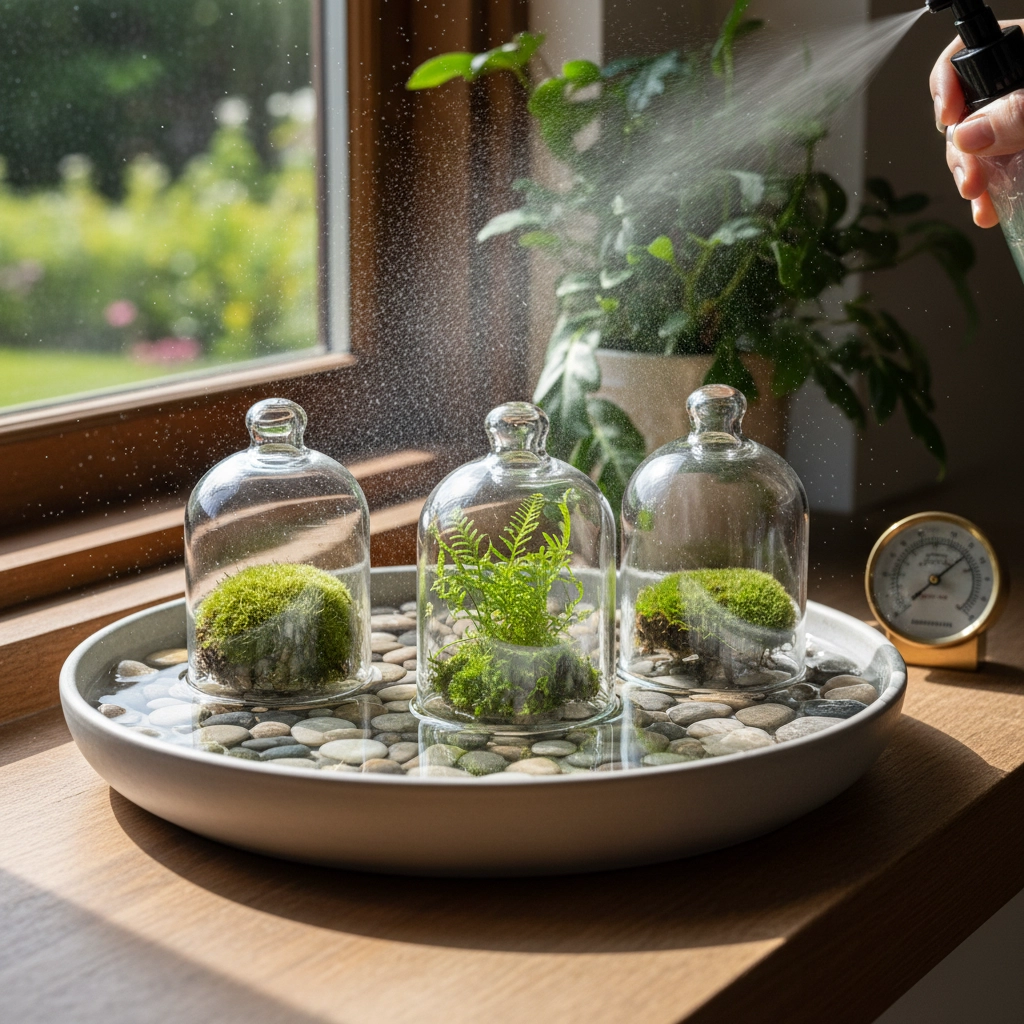
The Misting Method: A simple spray bottle becomes your best friend. Mist your moss regularly, but don't soak it to the point where it's dripping. Think gentle morning dew, not thunderstorm.
Humidity Trays: Fill a tray with water and pebbles, then place your moss container on top. As the water evaporates, it creates a lovely humid bubble around your plants.
The Terrarium Advantage: Closed containers naturally maintain higher humidity levels. You can even add wet wipes inside enclosed terrariums for gradual moisture release – sounds weird, but it works.
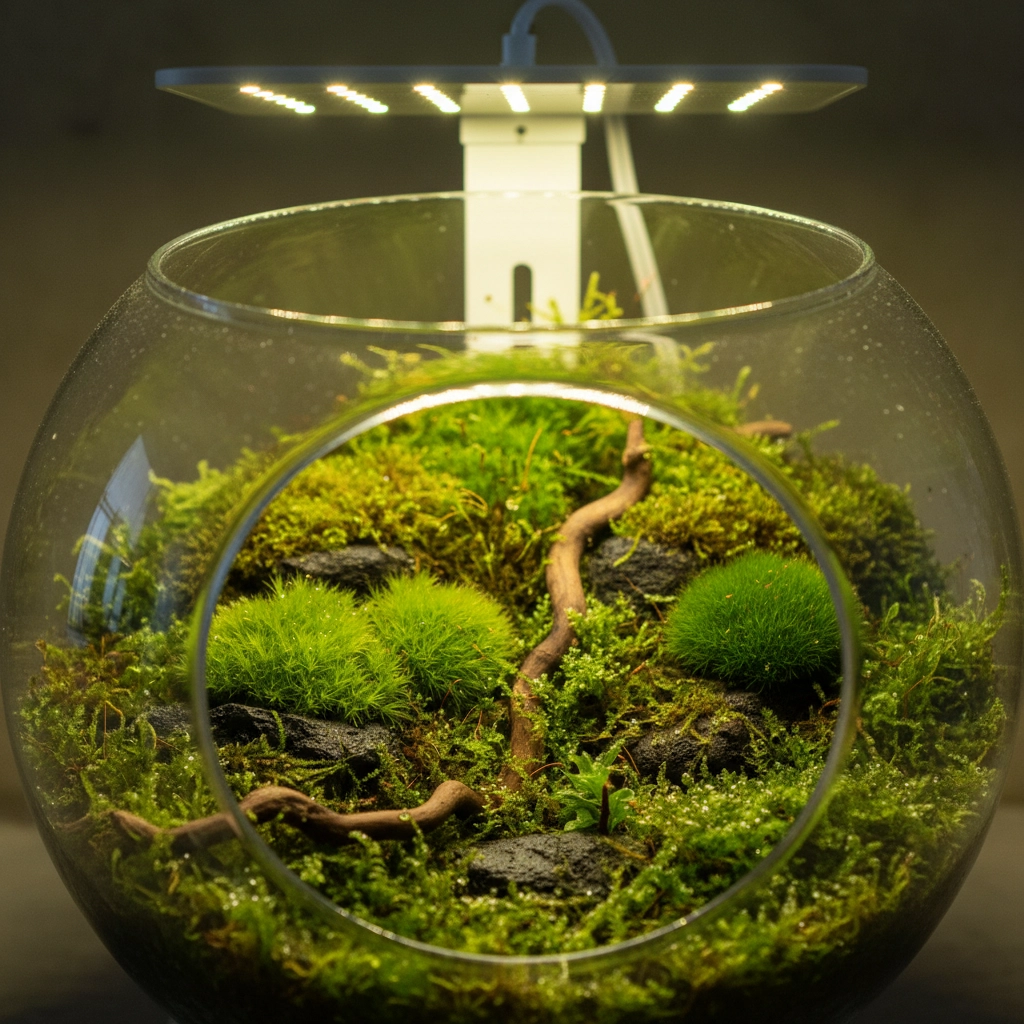
Just remember: humidity is great, but you don't want to go overboard. If you're consistently hitting above 90%, you're entering mold territory, and nobody wants that drama.
The watering game with moss is all about finding that sweet spot between "consistently moist" and "underwater swamp." Your moss wants to feel like a well-wrung sponge – damp but not dripping.
Here's your new mantra: water when the top layer of soil feels dry to the touch. For most setups, this means checking every few days and giving a gentle watering as needed. The key is consistency – moss hates dramatic wet-dry cycles.
If you're working with Sphagnum moss specifically, keep it moist at all times, but make sure excess water can drain away. Standing water is a recipe for root rot and general moss unhappiness.
Good news on the temperature front – most indoor environments are naturally perfect for moss. They prefer cool to moderate temperatures between 50-77°F (10-25°C), which basically describes most comfortable indoor spaces.
Avoid placing your moss near heating vents, radiators, or air conditioning units. Moss appreciates consistency, and those dramatic temperature swings are just unnecessary stress.
One of the best things about moss is how low-maintenance it is. But a little regular care keeps it looking its best. Think of it like giving your moss a gentle spa day every now and then.
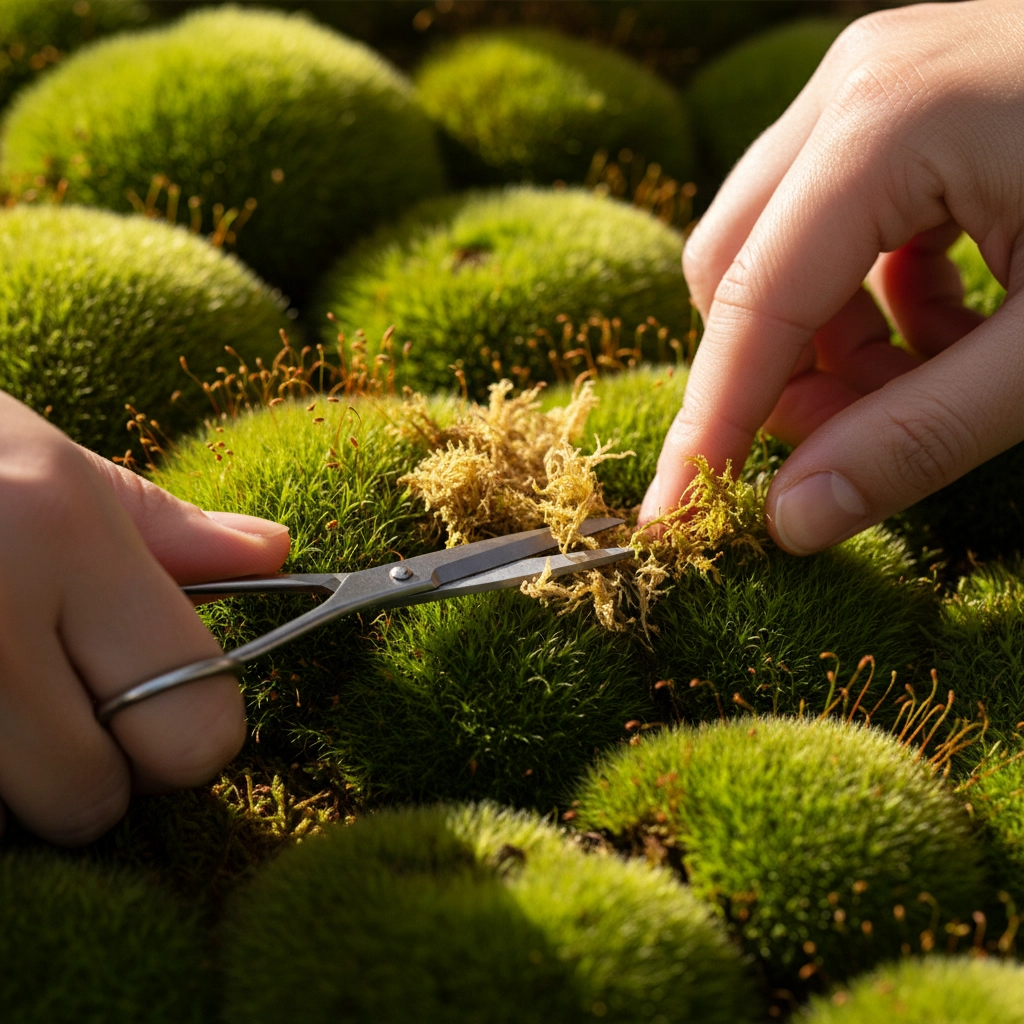
Pruning for Success: Use small, clean scissors to trim away any yellow or brown bits. This isn't just about aesthetics – it improves air circulation and encourages new growth. After pruning, you'll usually see new shoots appearing within 2-3 weeks.
Dust Duty: Gently brush away dust with a soft brush or give it a light rinse with your spray bottle. Clean moss is happy moss, and it prevents any unwanted bacterial party crashers.
Even with the best care, sometimes issues pop up. Here's how to handle the most common moss problems:
Mold Situation: If you spot mold, don't panic. Increase ventilation immediately and gently scrape off the surface mold. A light dusting of activated charcoal or a diluted cinnamon spray can work as natural antibacterial treatments.
Color Changes: If your vibrant green moss is looking a bit pale or yellowish, it might be getting too much light or needs some nutrients. Move it to a shadier spot and consider a diluted liquid fertilizer designed for moss.
Pest Problems: The occasional aphid or springtail isn't the end of the world. A gentle rinse with warm water usually does the trick, or you can use insecticidal soap if things get serious.
Ready to dive into the moss world? Start small and build your confidence. Pick up a few different moss varieties and experiment with different setups – maybe a simple terrarium or a moss garden in a shallow dish.
Remember, consistency beats perfection every time. Set up a simple weekly routine: check the moisture level, trim any dead bits, and give everything a gentle misting. Your moss doesn't need you to be perfect; it just needs you to show up regularly.
The beauty of moss is that it rewards patience and consistency rather than dramatic interventions. Unlike some plants that seem to thrive on chaos and drama, moss appreciates the steady, reliable approach to care.
Moss care really boils down to this: create a consistently humid, gently lit environment, water regularly but not excessively, and resist the urge to fuss too much. These ancient plants have been perfecting the art of survival for millions of years – they just need you to provide the basics and get out of their way.
In a world of high-maintenance houseplants and complicated care routines, moss offers something refreshing: the chance to slow down, observe closely, and find beauty in simplicity. Plus, there's something deeply satisfying about creating your own miniature forest ecosystem right on your windowsill.
So go ahead, embrace the moss trend of 2025. Your future self (and your stress levels) will thank you for choosing one of nature's most resilient and rewarding plants.


