How to Select Carnivorous Plants for Your Home (A Guide Beyond the Venus Flytrap)
, by Brian Tant, 8 min reading time
, by Brian Tant, 8 min reading time
You've probably already fallen down the carnivorous plant rabbit hole: and honestly, welcome to the club. Maybe you started with a Venus flytrap (it's a gateway drug), watched those dramatic little jaws snap shut a few times, and now you're wondering what other botanical predators might thrive in your space. The good news? There's a whole world of carnivorous plants beyond the classic VFT, and many of them are surprisingly well-suited to home cultivation.
The thing about Venus flytraps is they've become the poster child for carnivorous plants, but they're actually among the more finicky options for indoor growing. Their dormancy requirements alone can trip up new enthusiasts who aren't prepared for that winter die-back phase. That's not to say they're impossible: we've got some gorgeous specimens like our Venus Flytrap B52 and Red Dragon variety that do beautifully with proper care: but there are definitely easier entry points into this fascinating plant family.
Let's talk about what makes a carnivorous plant truly suitable for your home environment. Unlike your standard houseplants, these botanical hunters have evolved some pretty specific requirements that mirror their natural bog and wetland habitats. Light intensity, humidity levels, water quality, and seasonal rhythms all play crucial roles in their success. But here's the secret that many plant shops won't tell you: once you understand these fundamentals, carnivorous plants can actually be more straightforward than many tropical houseplants that demand constant appeasement.

The standout beginner option has to be the Cape Sundew, or Drosera capensis if you want to get technical about it. This South African native is basically the golden retriever of carnivorous plants: friendly, adaptable, and forgiving of beginner mistakes. Our Cape Sundew and Alba variety showcase exactly why this species has won over so many indoor gardeners.
What makes Cape Sundews particularly home-friendly is their tolerance for standard indoor conditions. While most carnivorous plants demand swamp-level humidity, Cape Sundews can handle the drier air of heated homes without throwing a botanical tantrum. They're compact enough for windowsills, produce those gorgeous dewdrops that catch light like tiny prisms, and they don't require the winter dormancy that trips up so many Venus flytrap enthusiasts.
The feeding mechanism is elegantly simple too. Instead of dramatic snap traps, sundews use a "sticky trap" approach: tiny insects get caught in the dewdrops covering their leaves, then slowly digested. It's less theatrical than a Venus flytrap's jaw-snap, but equally effective and much less energy-intensive for the plant. You'll often find small gnats and fruit flies naturally caught on the leaves, making these plants genuinely useful for pest control in your home.
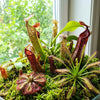
For those ready to venture into pitcher plant territory, North American pitcher plants (Sarracenia species) offer stunning visual appeal with their tall, elegant pitchers that look like something from an alien landscape. These plants have adapted to temperate climates, which means they're surprisingly comfortable with the temperature fluctuations of most homes. However, they like a winter dormancy and needs tons of light to support growth.

This dormancy requirement isn't just a preference: it's essential for the plant's long-term survival. From November through February, these plants need to experience temperatures between 35-45°F to reset their internal clock. During this time, their pitchers will die back, and the plant will look decidedly deceased. Many new growers panic and try to "help" the plant by bringing it into warm conditions, but this actually prevents the necessary rest period and will eventually kill the plant.
The payoff for providing proper dormancy is spectacular spring growth. New pitchers emerge with vibrant colors: deep purples, bright greens, and striking red veining that intensifies with adequate light. These plants love full sun and can handle direct southern exposure that would scorch many houseplants. If you've got a sunny spot and can manage the winter dormancy (a cold garage or unheated basement works perfectly), North American pitcher plants make striking architectural additions to your plant collection.
On the opposite end of the dormancy spectrum are Nepenthes, the tropical pitcher plants that never need a rest period. These climbing vines produce hanging pitchers that range from tiny thumb-sized cups to massive containers that could hold a coffee's worth of liquid. What makes them particularly appealing for home growers is their year-round growth habit and slightly more flexible feeding requirements.
Unlike the precise insect-catching mechanisms of Venus flytraps, Nepenthes pitchers function more like passive traps. Insects are attracted by nectar around the rim, slip on the waxy surface, and fall into the pitcher where they're gradually digested. You can even supplement their diet by dropping dead insects into the pitchers: they're not picky about whether their prey is live or pre-deceased.

The trade-off with Nepenthes is they like humidity. While they're more forgiving than many people assume, they do appreciate higher humidity levels than Cape Sundews. A bathroom with good light, a spot near a humidifier, or even a pebble tray can provide enough atmospheric moisture to keep them content. The visual reward is worth the extra effort: mature Nepenthes can produce dozens of pitchers in various stages of development, creating a living sculpture that's endlessly fascinating.
Butterworts (Pinguicula species) deserve serious consideration for anyone wanting something compact and surprisingly beautiful. These plants look almost succulent-like, with flat rosettes of leaves that have a distinctly buttery texture: hence the common name. The leaves are covered in tiny glands that produce a greasy substance perfect for catching small insects like gnats and aphids.
What makes butterworts particularly suitable for home cultivation is their size and adaptability. Most species stay compact, rarely exceeding 4-6 inches across, making them perfect for windowsill collections or terrarium setups. Many Mexican butterworts have adapted to seasonal dry periods, which means they can handle the lower humidity of indoor environments better than bog-dwelling species.
The flowers are an unexpected bonus: delicate purple, pink, or white blooms that hover above the foliage on thin stems, looking more like tiny orchids than carnivorous plant flowers. Some species are nearly constant bloomers, providing color throughout the growing season.
Bladderworts represent the most unusual option in the carnivorous plant world, though they're admittedly not for everyone. These aquatic or semi-aquatic plants use tiny bladder traps to catch microscopic prey: think water fleas, mosquito larvae, and other tiny aquatic creatures. While they might sound exotic and complicated, some terrestrial bladderworts can thrive in the same bog-like conditions as other carnivorous plants. Note that we don't deal in bladderworts because we don't have the proper facilities.

The appeal of bladderworts lies in their flowers and their truly alien trapping mechanism. The tiny bladders create a vacuum that sucks in prey faster than the blink of an eye: we're talking milliseconds. It's the plant equivalent of a high-tech vacuum trap, and while you can't see it happening without magnification, knowing it's occurring adds a whole layer of fascination to these plants.
Regardless of which species captures your interest, certain fundamentals apply across all carnivorous plants. Water quality matters immensely: these plants have evolved in nutrient-poor environments and are extremely sensitive to dissolved minerals. Tap water in most areas contains enough dissolved salts to eventually bring the sad to carnivorous plants, so distilled water, rainwater, or reverse osmosis water is essential. The traditional watering method involves keeping about a quarter-inch of water in a tray beneath the pot, allowing the plant to absorb what it needs while maintaining consistent moisture.
Soil composition is equally critical. These plants need mineral-free, well-draining but moisture-retentive growing medium. The classic mix is equal parts sphagnum peat moss and horticultural sand, though ratios can be adjusted based on specific species requirements. Never use regular potting soil or garden soil: the nutrients will actually harm these plants that have evolved to thrive in nutrient-poor conditions.

Feeding is often a source of anxiety for new carnivorous plant growers, but it's usually less complicated than people assume. If your plants are growing in adequate light near a window, they'll likely catch enough small insects naturally to supplement their diet. For plants in low-insect environments, you can provide freeze-dried bloodworms, small beetles, or even catch flies to feed them. The key is using appropriately sized prey: remember carnivores are plants first. The bugs are just for minerals and trace nutrients.
Light requirements tend to be the make-or-break factor for indoor carnivorous plant success. These plants have evolved in open bog environments with intense sunlight, and insufficient light is the most common cause of failure in home cultivation. A south-facing windowsill with several hours of direct sun is ideal, though west-facing windows can work for many species. If natural light is limited, full-spectrum LED grow lights positioned close to the plants can provide adequate intensity.
The beautiful thing about expanding beyond Venus flytraps is discovering just how diverse and adaptable carnivorous plants can be. Whether you're drawn to the elegant simplicity of sundews, the architectural drama of pitcher plants, or the compact charm of butterworts, there's likely a species that fits both your growing conditions and aesthetic preferences. These plants offer the satisfaction of growing something truly unique while providing genuine pest control benefits: a win-win that's hard to beat in the houseplant world.


