
Fall Is Moss Season: Why Your Indoor Moss Grows Best When the Weather Cools
, by Brian Tant, 8 min reading time
, by Brian Tant, 8 min reading time
If your indoor moss looks a little tired after summer, fall is an excellent time to give it another chance. Cooler rooms, softer sunlight, and slower evaporation create conditions that feel surprisingly close to a mossy forest floor.
Moss does not need long, bright summer days to stay healthy. It prefers gentle light, steady moisture, and a cool environment without big temperature swings. Once the weather cools, you can often revive a struggling patch or start a fresh display without fighting intense heat and rapid drying.
The trick is understanding what fall changes inside your home. Outdoor temperatures may be perfect for moss, but indoor heating can quietly turn a humid corner into a miniature desert.
Moss absorbs water across its leaves and stems rather than relying on deep roots. That makes it wonderfully adaptable to rocks, wood, shallow trays, and terrarium surfaces. It also means moss can lose moisture quickly when the air becomes hot or dry.
Most indoor moss does well in a cool-to-moderate range around 55–75°F. Typical fall room temperatures often land right in that zone. The cooler air slows evaporation, helps moss stay hydrated longer, and reduces the stress caused by hot windowsills or warm summer rooms.
Cooler does not mean cold. Keep live moss away from unheated drafty windows, exterior doors, and rooms that regularly dip into the 40s. Growth may slow in chilly conditions, and sudden temperature changes can leave a moss display looking dull or brittle.
A stable spot matters more than chasing the exact perfect temperature. A shelf several feet from a window, a shaded bathroom counter, or a plant stand in a cool room can all work well. Avoid placing moss directly above a radiator or beside a heat register. That warm airflow can dry the surface before you notice anything is wrong.
Fall light is softer and less intense than summer light. That suits moss, which can scorch or dry out under direct sun. Bright indirect light near an east- or north-facing window usually gives moss enough energy without turning the display into a greenhouse.
Shorter days do not automatically mean your moss will stop growing. Moss is adapted to shaded habitats, and many varieties continue photosynthesizing in low to moderate light as long as they receive some gentle illumination each day.
The important distinction is between soft light and no light. A moss tray tucked into a dark hallway may stay green for a while, then gradually thin or fade. If your room becomes noticeably dim in late fall, move the display closer to a window while keeping direct rays off the moss. A small, diffuse LED grow light can also help. Place it above the display and run it for several hours rather than blasting the moss with intense light all day.
Watch the moss instead of the calendar. Healthy growth tends to look springy, evenly colored, and fresh. Pale, stretched, or increasingly brown patches usually point to a light or moisture problem rather than a normal seasonal change.

The first time your home heating switches on, your moss may notice before you do. Forced air and radiators lower local humidity, even when the room still feels comfortable to you. Moss that needed a light mist every few days during late summer may need more frequent attention once the air dries.
Aim to keep live moss damp and springy, not soaked. The surface should look fresh and feel cool to the touch. Water pooling beneath a moss mat or collecting in a decorative container is a warning sign. Constant saturation limits airflow and encourages mold, algae, and unpleasant odors.
Use distilled, rain, or reverse-osmosis water when possible. Moss has no thick protective coating to keep minerals out, and repeated exposure to mineral-heavy tap water can leave deposits or stress delicate growth. A fine mister works well for open displays because it adds moisture without turning the substrate into a puddle.
Humidity support can come from a small room humidifier, a shallow pebble tray, or a glass container with some ventilation. Grouping several humidity-loving plants together also creates a slightly moister pocket of air. The goal is not to seal everything inside a fog bank. Good moss care balances humidity with gentle air movement.
Closed terrariums hold moisture longer, so check the glass before reaching for the mister. Light condensation that clears during the day is usually fine. If the container stays heavily fogged, smells musty, or develops fuzzy growth, open it for a while and let excess moisture escape.
The names sheet moss, cushion moss, and mood moss describe useful visual types, though sellers may use them for different species. Check the plant label when possible, especially if you are building a mixed display.
Sheet moss creates a low, carpet-like layer. It works beautifully across a shallow tray, a piece of cork, or the surface of a terrarium. Because the mat is thin, it can dry at the edges before the center. Fall care usually means checking the perimeter and misting lightly enough to keep the whole sheet evenly damp.
Cushion moss grows in rounded, cloud-like mounds. It brings height and texture to a simple dish garden without competing with every other plant in the room. Dense cushions can hold moisture inside, so avoid drenching them. Fine misting and steady ambient humidity help the mound stay plump without becoming soggy.
Mood moss, often sold as a tufted or sculptural moss, gives displays a more windswept woodland look. It can tolerate brief dry spells better than some delicate carpet mosses, but it still performs best when the air remains humid and the moss does not become crisp. A shaded shelf with a stone, branch, or small piece of bark can make a very handsome fall display.
Species names matter because “moss” covers a wide range of plants. A moss sold for outdoor landscaping may not enjoy a warm, dry living room. Preserved moss is different again. It does not grow, photosynthesize, or need watering. If you want a living project, confirm that the material is live before you start misting.
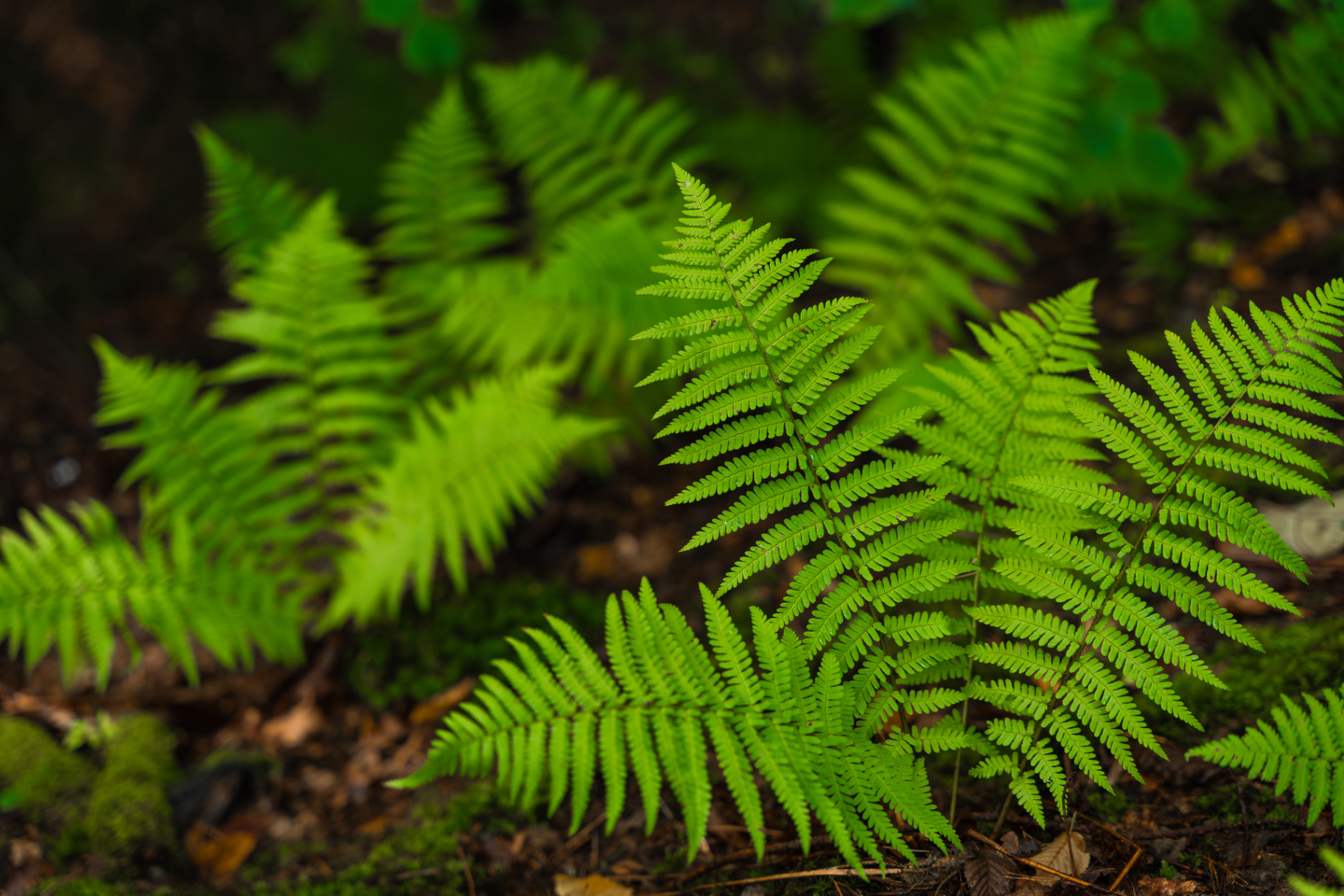
Fall is also a lovely time to pair moss with ferns. Their care needs overlap in useful ways: both enjoy indirect light, consistent moisture, and higher humidity than a dry office shelf usually provides.
A compact fern can give a moss display height while the moss softens the soil, stone, or container around it. The Rabbit’s Foot Fern is especially fun in a woodland-style arrangement because its fuzzy rhizomes creep across the surface and over the edge of a pot. The Blue Star Fern brings cool blue-green color and a more relaxed, cascading shape. A Gold Boston Fern adds warm chartreuse tones that look right at home beside autumn colors.
Keep the fern’s crown above the substrate, and give its roots enough room to breathe. Moss can sit around the plant, but it should not form a permanently wet blanket over the crown or soil surface. Water the fern according to its own needs, then mist the moss lightly between waterings if the surface begins to dry.
That distinction matters with other plant groups too. Carnivorous plants have different fall requirements, and moss should not automatically share their watering routine or standing-water setup. A Venus flytrap, sundew, or pitcher plant may need mineral-free water and specific seasonal adjustments, but that does not mean a moss display belongs in the same boggy conditions. Pair plants by matching their actual needs rather than forcing every green thing into one care plan.
Moss rewards consistency more than speed. You may not see dramatic changes from one week to the next, especially with cushion and mood moss. Look for smaller signs instead: a richer green color, fresh growth at the edges, or a patch that stays springy longer after misting.
Remove fallen leaves and debris before they settle into the moss. Check the display after turning on the heat. Move it away from a vent if the surface dries unusually fast. Open a terrarium when condensation refuses to clear. These small adjustments often make a bigger difference than adding more water.
If you have been waiting for the right season to start a terrarium, moss tray, or fern-and-moss corner, this is it. Fall gives you cooler conditions, softer light, and plenty of opportunities to build a little indoor forest before winter fully arrives.
Care note: This guide is for general plant care. Conditions vary by home and season. If you have pets/kids with sensitivities, use extra caution and place plants out of reach. Avoid chemicals or fertilizers unless you’re sure they’re carnivorous-plant safe.
Have you revived a moss display this fall, or are you starting your first one? Share your moss setup with Frond and Fang. We would love to see the tiny forests growing in your home. For more ideas, explore our indoor moss care guide and browse our fern collection.


